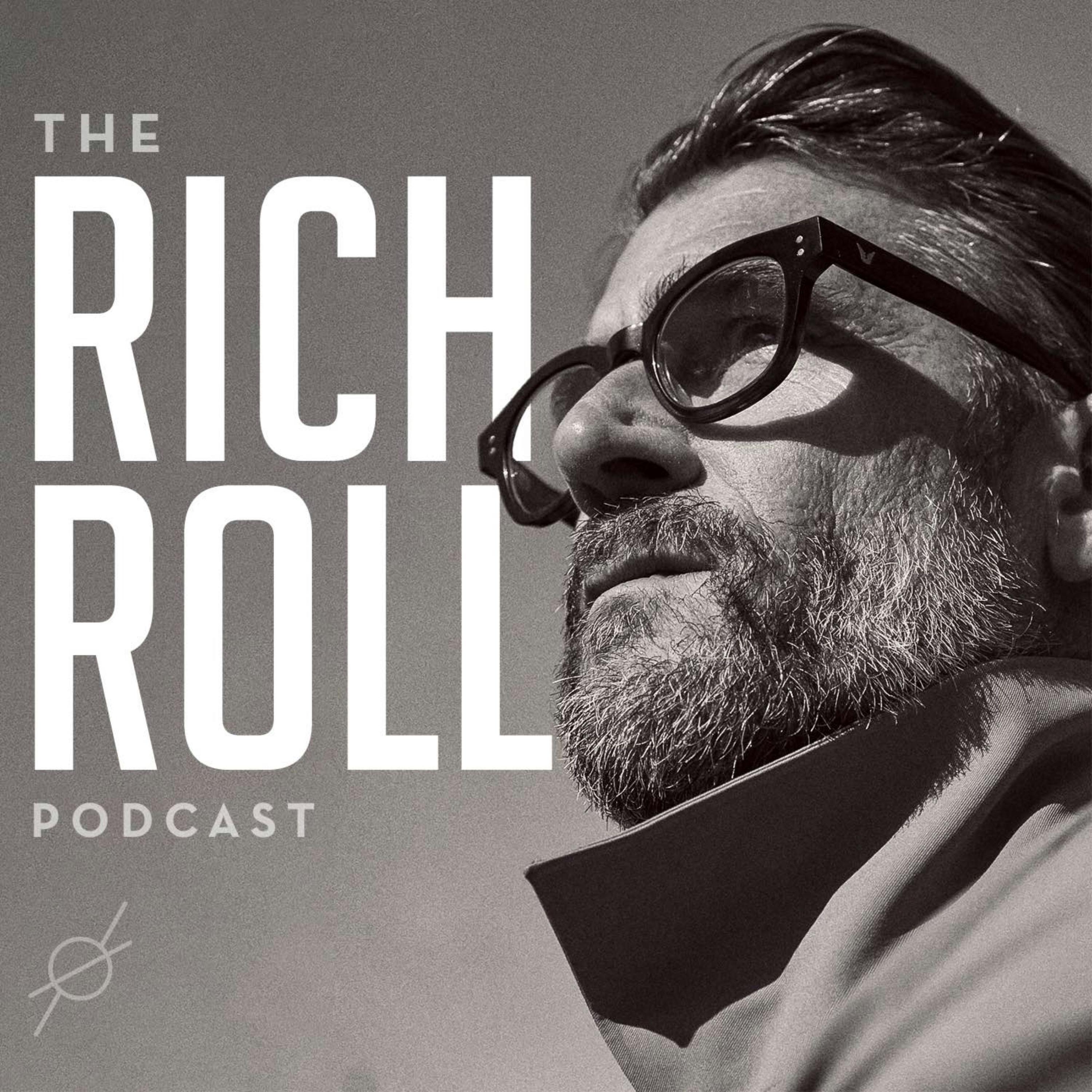
The Productivity Myth: Oliver Burkeman On Our Broken Relationship With Time, Embracing Our Limitations & Why More Isn’t Always Better
November 24, 2025
Key Takeaways Copied to clipboard!
- Productivity is not a moral imperative, and tying self-worth to the volume of completed tasks leads to a perpetual state of anxiety and discontentment.
- True agency and a meaningful life are found not by struggling against our limitations and finitude, but by embracing them, which shifts energy away from psychological avoidance.
- The illusion of control, often fueled by productivity systems, is countered by accepting our 'thrownness' into time, where making conscious choices about what to decline (saying no) protects our commitments (saying yes).
- Wiser procrastination involves consciously choosing which task to advance while tolerating the anxiety about all the unaddressed alternatives, rather than trying to eliminate procrastination entirely.
- Procrastination rooted in knowing what to do but avoiding it is often an attempt to cling to a feeling of control by resisting the vulnerability associated with making progress on central tasks.
- People-pleasing is fundamentally self-absorbed, stemming from the egocentric notion that one must manage the emotions of others, even when it impedes necessary action.
Segments
Productivity Debt and Self-Worth
Copied to clipboard!
(00:00:01)
Copied to clipboard!
- Key Takeaway: The modern ethos equates doing more things with inherent good, wrapping self-worth around productivity metrics, which is unsustainable because the input stream of tasks is infinite.
- Summary: The market floods with low-quality supplements once mainstream, contrasting with Momentous’s commitment to quality. The feeling of having too much to do drives people to seek clever systems or discipline, but the space of things needing to be done is infinite, leading to a constant chase. This dynamic creates ‘productivity debt,’ where one must constantly achieve just to feel baseline worthy.
Busyness Without Satisfaction
Copied to clipboard!
(00:03:23)
Copied to clipboard!
- Key Takeaway: A major modern illness is busyness without satisfaction, often stemming from jobs lacking social meaning beyond pay, fueling chronic anxiety and discontentment.
- Summary: Many modern careers fail to provide social meaning beyond compensation, contributing to a broader crisis of meaning. This malady fuels anxiety, irritability, exhaustion, and general discontentment, even for those who derive meaning from other life aspects. The host admits to struggling to relax despite a fulfilling life due to the overwhelming backlog of tasks.
Oliver Burkeman’s Core Thesis
Copied to clipboard!
(00:04:53)
Copied to clipboard!
- Key Takeaway: Meaningful productivity is achieved by accepting human limitations and finitude rather than struggling against them, which is the core of Oliver Burkeman’s philosophy.
- Summary: Oliver Burkeman’s work centers on repairing our dysfunctional relationship with time, challenging conventional efficiency notions. His philosophy of imperfectionism suggests that an accomplished life is built by accepting limitations, vulnerability, and finitude. This acceptance is the path to less anxiety and more meaningful engagement with what matters most.
Broken Relationship with Time
Copied to clipboard!
(00:08:12)
Copied to clipboard!
- Key Takeaway: Our suffering stems from the fundamental misunderstanding that time is a controllable resource we possess, rather than the present moment being the only reality we inhabit.
- Summary: The core problem is viewing time as a resource to be controlled, leading to attempts to feel like ’little gods’ over our schedules. We have only partial control over time’s unfolding, and time will ultimately win. Procrastination and distraction are often attempts to feel less limited by this perceived lack of control.
Productivity as Moral Imperative
Copied to clipboard!
(00:13:00)
Copied to clipboard!
- Key Takeaway: The cultural conditioning that productivity is inherently good leads to measuring self-worth by output, which is a flawed metric since the input of tasks is limitless.
- Summary: There is a deep conditioning, influenced by capitalism and history, that equates doing many things with being better and feeling good about oneself. This creates a tangle where self-worth is wrapped up in output against an infinite stream of inputs. A meaningful life must be defined by the quality and spirit of what was done, not just the quantity.
The Quest for Mastery vs. Acceptance
Copied to clipboard!
(00:17:25)
Copied to clipboard!
- Key Takeaway: The quest for mastering time and productivity is itself the problem; true calm comes from embracing the irresolvability of our limitations.
- Summary: Burkeman’s journalistic work testing productivity tactics revealed that the problem wasn’t solved by the 101st technique, suggesting the quest itself is flawed. The global thesis is that humans hate their finitude and use personal transformation projects to ignore this truth. Embracing limitations is the harder path that leads to less anxiety and more meaningful productivity.
Agency Through Acknowledging Limits
Copied to clipboard!
(00:22:48)
Copied to clipboard!
- Key Takeaway: Agency and traction on life are found on the other side of acknowledging one’s lack of ultimate control, similar to concepts of surrender in recovery.
- Summary: Productivity and busyness often serve as avoidance tools to keep terrifying ideas like death and insignificance at bay. Understanding that the situation is ‘worse’ (i.e., impossible to fully control) than we think allows us to relax into life rather than constantly fighting reality. This shift from ‘really hard’ to ‘impossible’ frees up energy for possible actions.
Limit-Embracing Life Philosophy
Copied to clipboard!
(00:27:26)
Copied to clipboard!
- Key Takeaway: A limit-embracing life starts from the position that there will always be more to do than one can accomplish, and accepting this truth reduces psychological flinching.
- Summary: The limit-embracing life accepts that we are finite, will never be certain about the future, and remain vulnerable to unwanted experiences. By accepting these truths instead of flinching, energy is freed from emotional avoidance, leading to a calmer, more enjoyable, and productive existence. This is the opposite of the striver’s dilemma, which seeks total domination of reality.
Kayak vs. Super Yacht Metaphor
Copied to clipboard!
(00:32:47)
Copied to clipboard!
- Key Takeaway: Human existence is like being in a kayak on the river of time—vulnerable and steering moment-to-moment—not captaining a super yacht with a pre-programmed destination.
- Summary: People default to believing life should be like captaining a super yacht, programming destinations and expecting stately control. The reality is being in a kayak, having partial agency to steer while accepting the unknown nature of the river ahead. Strategies aimed at total control only enable the false belief that we are in the super yacht.
Perfectionism Paralysis
Copied to clipboard!
(00:35:07)
Copied to clipboard!
- Key Takeaway: Perfectionism is a stance that insists reality must measure up to an unattainable fantasy, leading to control-seeking behaviors that prevent actual progress and commitment.
- Summary: Perfectionism is not a brag but a stance that prevents diving into life, relationships, or creative work because nothing measures up to the internal fantasy. To create, one must loosen the grip on control and accept the scary reality of imperfect output, such as writing a messy first draft. This contrasts with building tracking systems, which only feel like gaining control without actual progress.
Free Writing and Done Lists
Copied to clipboard!
(00:42:08)
Copied to clipboard!
- Key Takeaway: Practicing free writing—making a mess on the page without judgment—and maintaining a ‘done list’ are practical tools to overcome creative cramping and perfectionist paralysis.
- Summary: The author experienced creative cramping due to high expectations, which was eased by free writing—making a mess on the page without the expectation of quality. The ‘done list’ is generative, providing a satisfying accumulation of proof of agency, unlike the to-do list which compares output against an infinite yardstick. Low-level accomplishments on a done list can build efficacy and snowball into functional momentum.
Mystical Energy of Completion
Copied to clipboard!
(00:45:40)
Copied to clipboard!
- Key Takeaway: Completing tasks releases generative energy, whereas perfectionism and multitasking, which delay completion, become emotional drains because they resist the sequential reality of time.
- Summary: Completing things kindles energy because it aligns with reality’s sequential nature, unlike multitasking which attempts to defy this structure. The high stakes often associated with focused work blocks increase perfectionism and constraint. The energy released by finishing a defined step allows one to move consciously to the next task.
Success and Opportunity Cost
Copied to clipboard!
(00:48:25)
Copied to clipboard!
- Key Takeaway: Success can worsen the feeling of constraint because it increases the quality of opportunities, making the choice of what to say ’no’ to more painful and increasing the perceived failure of not using time perfectly.
- Summary: As one gains autonomy and success, scheduling time becomes harder because the options available are better, increasing the cost of saying no. The feeling of constraint worsens because failure to use a dedicated block perfectly feels like a greater failure due to the missed opportunities. This reinforces that success is not an antidote to time anxiety.
Prioritizing the Present Moment
Copied to clipboard!
(00:49:50)
Copied to clipboard!
- Key Takeaway: True fulfillment is available in the present stillness, and resisting this by constantly deferring gratification to an idealized future self is a narrative that prevents life from being claimed now.
- Summary: The practice is to stop being overly kind to the future self by accepting that the present moment is the only reality available. Deferring gratification too much—like waiting for a thousand marshmallows—is a bad decision if it means never enjoying life. True productivity and meaning are found in stillness, which feels unpleasantly vulnerable but is the reality of life in session.
Daily-ish Commitment Resilience
Copied to clipboard!
(01:02:00)
Copied to clipboard!
- Key Takeaway: Committing to a habit ‘daily-ish’ builds resilience against the brittle nature of strict streaks, recognizing that the skill of returning to a practice after a lapse is more important than unbroken consistency.
- Summary: The concept of ‘daily-ish’ allows for a blurry boundary around habit adherence, making the practice more resilient to real-life interruptions. This contrasts with the hustle culture fixation on unbroken streaks, which often leads people to abandon an enterprise entirely after one lapse. The core skill in practices like meditation is noticing distraction and returning, not achieving perpetual non-distraction.
Finding Decisions in Projects
Copied to clipboard!
(01:06:17)
Copied to clipboard!
- Key Takeaway: When stuck on a project, actively seeking a small, real decision to make—thereby closing off alternatives—is a practical tool to move past the illusory control of indecision.
- Summary: Tools for daily work should flow from core principles; a useful technique is looking for a small, concrete decision within a project morass. Indecision often masks a desire to maintain illusory control by avoiding progress and the imperfect reality of commitment. Making a choice, even a minor one like selecting a chapter opening, commits you to a path and generates momentum.
Reframing Procrastination
Copied to clipboard!
(01:09:13)
Copied to clipboard!
- Key Takeaway: Procrastination should be reframed as a necessary function of finitude, where the goal is to become a ‘wiser procrastinator’ by consciously choosing what to advance while tolerating the anxiety of what is being deferred.
- Summary: Since we are always procrastinating on almost everything due to limited time, the goal is not to eliminate it but to get better at it. Wiser procrastination involves making a conscious choice about which task to move forward on now. This requires tolerating the self-criticism about all the other things one is not making progress on at that moment.
Elasticity of Time and Priorities
Copied to clipboard!
(00:53:43)
Copied to clipboard!
- Key Takeaway: Prioritizing core values, even if it means interrupting scheduled deep work, often results in life feeling better and necessary tasks still getting completed, suggesting time is elastic, not strictly linear.
- Summary: When the host prioritizes family calls over scheduled deep work, the resulting better state allows him to manage other problems effectively, suggesting time bends to true priorities. Resisting interruptions by trying to maintain a rigid schedule leaves a bad taste for everyone involved. Fully entering an interruption, even a brief one, is often more satisfying than giving it only a fraction of attention.
Reframing Procrastination
Copied to clipboard!
(01:08:48)
Copied to clipboard!
- Key Takeaway: We should aim to become ‘wiser procrastinators’ by consciously choosing what to move forward on, rather than trying to eliminate procrastination entirely.
- Summary: There is a ‘good form’ of procrastination where we are always procrastinating on most things because our capacity is finite. Becoming a wiser procrastinator means consciously choosing which task to advance while tolerating the anxiety about the unchosen tasks. The other type of procrastination, where one avoids known tasks, is usually an attempt to cling to control due to vulnerability.
Procrastination and Vulnerability
Copied to clipboard!
(01:10:58)
Copied to clipboard!
- Key Takeaway: Procrastination on central tasks often stems from resisting the vulnerability or difficult emotion expected to arise from actually starting the work.
- Summary: Sometimes procrastination is productive rumination, allowing the unconscious brain to solve problems passively. However, when avoiding known tasks, it often relates to resisting an expected emotion like distress or awkwardness. This resistance creates more pain in the delay, as the ‘hump’ of the task grows larger through neglect.
People-Pleasing as Egocentrism
Copied to clipboard!
(01:14:08)
Copied to clipboard!
- Key Takeaway: People-pleasing is an extraordinarily self-absorbed behavior, masquerading as kindness, because it centers on managing the feelings of others rather than the task itself.
- Summary: The speaker realized that people-pleasing is often a form of narcissism because it focuses entirely on avoiding external disapproval. Entertaining fantasies about how an editor is pacing over a deadline is self-centered, assuming one’s actions are the center of another person’s universe. This egocentricity applies whether one is an egomaniac or incredibly retiring and worried about others’ feelings.
Book Structure and Practice
Copied to clipboard!
(01:16:30)
Copied to clipboard!
- Key Takeaway: The new book is structured as a 28-day program offering short chapters with ideas and assignments to facilitate consistent, gradual practice rather than relying on a single lightning-bolt perspective shift.
- Summary: The book aims to be an active ingredient in the process of change, avoiding the pitfalls of offering only a perspective shift without steps, or offering steps detached from an emotional journey. The structure encourages consistent, regular, but gradual immersion into a new way of being, acknowledging that lapses are part of the human condition.
Deconstructing Self-Limiting Stories
Copied to clipboard!
(01:22:58)
Copied to clipboard!
- Key Takeaway: Overcoming setbacks requires deconstructing the inherited, childhood-baked stories we tell ourselves about our capabilities, recognizing them as stories rather than absolute reality.
- Summary: Inability to master new habits often relates to deeply ingrained personal narratives about self-worth and capability. The benefit comes from seeing these narratives as stories, leading to disidentification from inherited agendas. Practices like morning pages help create a third-party relationship to these bothersome thoughts, allowing for choice rather than being trapped by them.
Privilege and Universal Dilemmas
Copied to clipboard!
(01:26:26)
Copied to clipboard!
- Key Takeaway: While socioeconomic suffering varies greatly, the core existential dilemmas of finitude, choice, and not being able to do everything are universal human structures.
- Summary: External life circumstances dictate the severity of suffering, contrasting dilemmas like choosing between business opportunities versus keeping a job to feed a child. However, the underlying structure—having to make tough choices with limited time—affects everyone. Acknowledging the impossibility of external demands, even without changing external life, restores psychological power by seeing the truth of the situation.
Productivity as Devotional Practice
Copied to clipboard!
(01:29:15)
Copied to clipboard!
- Key Takeaway: The work functions as a Trojan horse, using productivity concepts to guide readers toward self-actualization, which involves honoring values, physical reverence, and presence.
- Summary: The ultimate goal moves beyond external achievement (like promotions) toward higher needs like alignment with values and serving the moment. The book’s subtitle about four weeks is a bait-and-switch; it’s meant to be a way of being one continually returns to, not a technique to be installed and forgotten. This continuous engagement is antithetical to the desire to find a final technique that eliminates the need for thought.
Agency Through Acceptance
Copied to clipboard!
(01:32:27)
Copied to clipboard!
- Key Takeaway: True agency is found not through the illusion of total control over life’s messiness, but by accepting the current reality as the starting point from which to make the best choices.
- Summary: The productivity myth presumes control over life, but reality is messy and uncertain. Acceptance is not resignation; it is acknowledging the reality you are in so you can effectively change what you want to change. This approach allows for productive action to become an expression of joy in living, rather than just plugging a gap until one finally feels worthy.
The Ease of Creation
Copied to clipboard!
(01:35:26)
Copied to clipboard!
- Key Takeaway: The ingrained equation that one’s best work is inextricably tied to capacity for suffering must be challenged; allowing creative work to be easy is a courageous act.
- Summary: The idea of asking ‘What would this look like if it were easy?’ confronts presets linking effort and achievement to quality. Approaching difficult tasks with a spirit of ease, rather than combat, can lead to smoother outcomes, even if the situation remains inherently unpleasant. Meditation helps notice the internal ’tape’ that stops the natural flow of creative activity.
Impeding Natural Activity
Copied to clipboard!
(01:41:49)
Copied to clipboard!
- Key Takeaway: Natural reality is pure, unimpeded activity; self-imposed rules and stories are what arrest this natural flow, leading to unnecessary self-impediment.
- Summary: Zen teaching suggests that life unimpeded manifests as pure activity, meaning creation and generation are natural states. Telling ourselves rigid stories, like always writing between specific morning hours, stops us from seizing spontaneous opportunities that arise later in the day. The most important crossing point is moving from doing nothing to doing anything, even a tiny action.
Optimization vs. Meaning
Copied to clipboard!
(01:48:13)
Copied to clipboard!
- Key Takeaway: Optimization without a defined purpose (‘optimization for what?’) risks making one a more efficient system for processing throughput, potentially leading to worse decisions about what truly matters.
- Summary: The appeal of optimization lies in its promise of control, but it fails if the goal isn’t clear; optimizing only for throughput leads to busyness and focusing on unimportant tasks. Extreme longevity efforts can be dysfunctional if they stem from a distaste for finitude rather than a desire to be more present in this finite life. The motivation behind optimization must be conscious, lest it become an attempt to master the protocol itself.
Living for the Present Doing
Copied to clipboard!
(01:52:27)
Copied to clipboard!
- Key Takeaway: A major misconception is living provisionally for a future payoff, exemplified by the Keynes quote about only loving the cat’s kittens’ kittens, neglecting meaning in the present act.
- Summary: While pursuing long-term goals is necessary, there must be a role for finding meaning and enjoyment in the doing itself. The practice of ‘scruffy hospitality’ roots life in the present by deliberately letting go of perfectionist facades when inviting people over. This unvarnished reality fosters closeness and relieves the pressure of solving life as a conceptual puzzle.
0:00 / 0:00