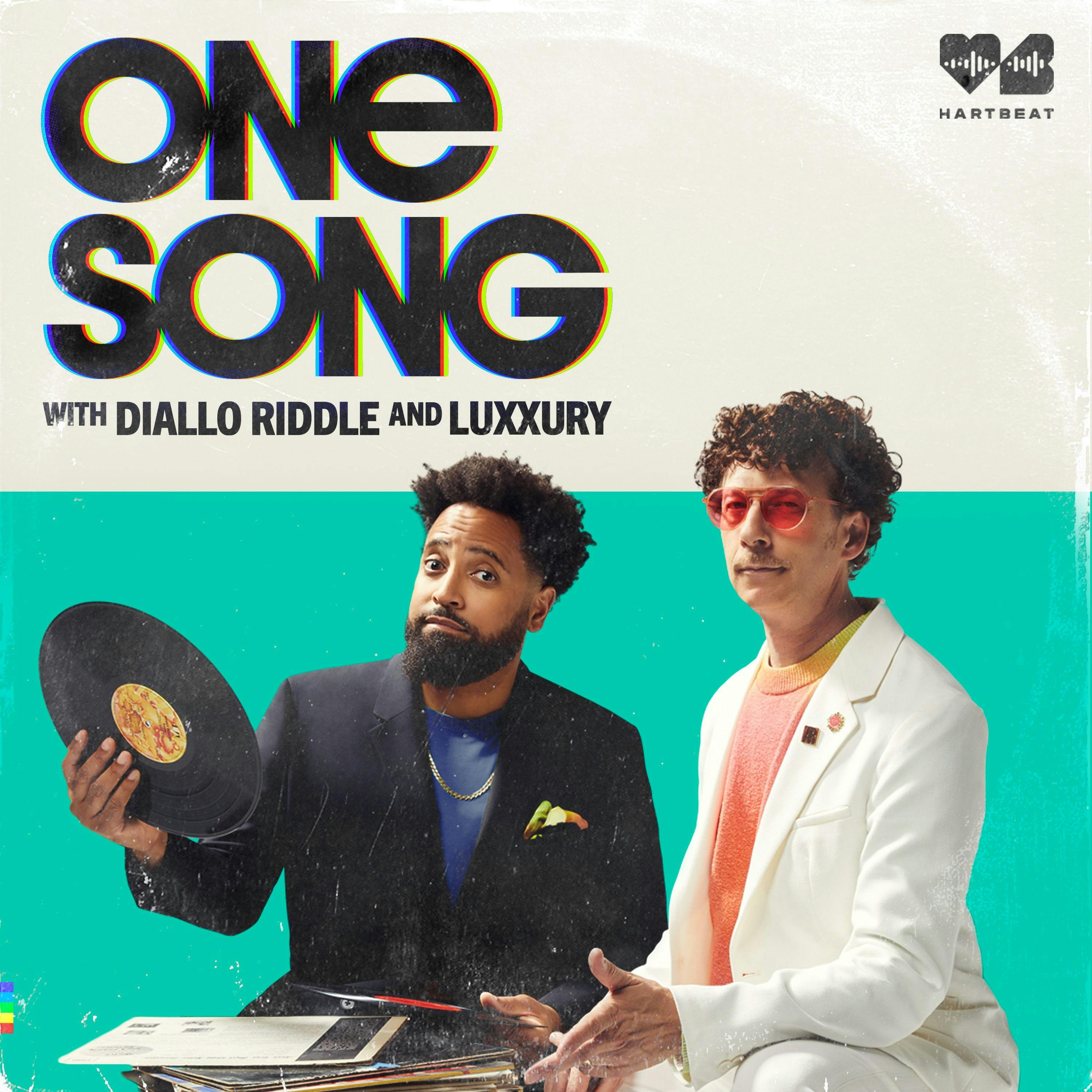
Iggy Pop S Lust For Life
November 13, 2025
Key Takeaways Copied to clipboard!
- Iggy Pop's "Lust for Life" emerged from his crucial 1977 Berlin collaboration with David Bowie, marking a move toward post-punk after his raw proto-punk work with The Stooges.
- The iconic, infectious rhythm section of "Lust for Life," played by Hunt Sales, consciously evokes Motown classics like The Supremes' "You Can't Hurry Love" while also drawing inspiration from the *George of the Jungle* theme song.
- The abstract lyrics, co-written by Iggy Pop, are heavily influenced by William Burroughs' cut-up poetry, with the provocative line "I've had it in the ear before" meaning to be screwed over, not referencing drugs or sex as commonly assumed.
- Iggy Pop's continued vitality at age 78, exemplified by his upcoming Coachella performance, challenges the nihilistic stereotype often associated with punk rock figures.
- The Berlin partnership between Iggy Pop and David Bowie in 1977 produced five iconic records, serving as a precursor to the post-punk movement.
- The segment transitioned into a 'One Song' feature on the Synthpop genre, highlighting its flexible definition as pop music made with synthesizers, often featuring emotionally detached music contrasted with soulful vocals.
Segments
Introducing Lust for Life Context
Copied to clipboard!
(00:00:16)
Copied to clipboard!
- Key Takeaway: Iggy Pop’s “Lust for Life” is intrinsically linked to the 1977 Berlin period and his collaboration with David Bowie.
- Summary: The episode focuses on Iggy Pop’s 1977 work in Berlin, highlighting the collaboration between the “Godfather of Punk” and David Bowie (“The Thin White Duke”). Although not an initial US hit, the song achieved cult status partly due to its placement in the film Train Spotting. The hosts identify themselves as Diallo and Luxury, setting the stage for their deep dive into the song.
Hosts Introduction and Show Premise
Copied to clipboard!
(00:01:30)
Copied to clipboard!
- Key Takeaway: One Song breaks down the stems and stories behind iconic songs to reveal why they deserve repeated listening.
- Summary: Diallo Road and Luxury introduce themselves and the premise of One Song: analyzing iconic tracks across genres to explain their enduring significance. Listeners are encouraged to watch the show on YouTube and Spotify. The hosts note that the infectious energy of “Lust for Life” is immediately apparent.
Train Spotting Opening Scene Impact
Copied to clipboard!
(00:02:03)
Copied to clipboard!
- Key Takeaway: The Train Spotting opening scene cemented “Lust for Life” in popular culture, creating a subversive juxtaposition with its later use in commercials.
- Summary: Both hosts first encountered the song via the iconic opening scene of Train Spotting, which features the famous spoken word lyrics over running characters. Luxury notes the irony of such a subversive song later being used in commercials, such as one for Carnival Cruises, which he finds jarring given the song’s themes.
Trainspotting Soundtrack Influence
Copied to clipboard!
(00:03:58)
Copied to clipboard!
- Key Takeaway: The Train Spotting soundtrack served as a formative influence for DJs by mixing contemporary artists like Blur with legends like Lou Reed and Iggy Pop.
- Summary: Diallo found the Train Spotting soundtrack highly formative, inspiring him to become an open-format DJ by mixing genres and eras. He compares the soundtrack’s curated flow to having “Smart Shuffle” before the iPod existed. Luxury confirms the soundtrack’s excellent sequencing, noting the importance of tracks like Lou Reed’s “Perfect Day.”
Iggy Pop’s Punk Godfather Status
Copied to clipboard!
(00:05:02)
Copied to clipboard!
- Key Takeaway: In 1977, Iggy Pop, a forefather of punk rock via The Stooges, pivoted to crafting post-punk alongside David Bowie.
- Summary: Luxury, a major Iggy Pop fan from The Stooges era, clarifies that this episode focuses on the 1977 solo work, not The Stooges. The Stooges’ 1969 output, like “Search and Destroy,” predated the punk wave, establishing Iggy as a godfather of the genre. However, in 1977, Iggy and Bowie were creating post-punk while punk was simultaneously existing.
Analysis of Search and Destroy Mix
Copied to clipboard!
(00:06:44)
Copied to clipboard!
- Key Takeaway: David Bowie’s mix of The Stooges’ “Search and Destroy” is technically poor, featuring an overly loud vocal track and tiny drums, yet its energy makes it a beloved proto-punk classic.
- Summary: The hosts play a clip of “Search and Destroy,” noting that David Bowie mixed the track poorly, resulting in an unbalanced sound where the vocals dominate. Despite technical flaws, the song’s energy preserves its status as one of the greatest proto-punk tracks. They reference a quote about perfection being how the song turned out, regardless of technical adherence.
Bowie’s Rescue and Berlin Move
Copied to clipboard!
(00:08:11)
Copied to clipboard!
- Key Takeaway: David Bowie intervened to help Iggy Pop during a severe addiction crisis in the mid-70s, leading to their move to Berlin to record.
- Summary: Bowie was crucial to Iggy Pop’s survival after the Stooges broke up in 1973, visiting him in a psychiatric hospital and inviting him on the Station to Station tour. Both artists were battling addiction, with Bowie subsisting on peppers, milk, and cocaine in LA. They relocated to France briefly to record The Idiot before settling in Berlin.
Nightclubbing Drum Machine Origin
Copied to clipboard!
(00:10:03)
Copied to clipboard!
- Key Takeaway: The robotic, motoric beat of “Nightclubbing” likely originated from a Roland TR-55 drum machine, which Bowie wanted to replace with live drums, but Iggy insisted on keeping the programmed sound.
- Summary: The hosts analyze “Nightclubbing,” noting its simple structure and groove reminiscent of a slowed-down Gary Glitter track. The beat is confirmed to come from a drum machine, possibly a Roland TR-55, which Iggy preferred over Bowie’s suggestion to use real drums to maintain the motoric, Berlin-era vibe. The drum sound was famously sampled in Nine Inch Nails’ “Closer.”
Bowie and Iggy Creative Dynamic
Copied to clipboard!
(00:12:14)
Copied to clipboard!
- Key Takeaway: Iggy Pop described his relationship with Bowie during the Berlin sessions as being Bowie’s “guinea pig,” where Bowie tested ideas on Iggy’s projects first.
- Summary: Iggy Pop viewed himself as Bowie’s test subject, allowing Bowie to arrange material for Iggy’s projects before using similar concepts on his own albums like Low. While The Idiot sonically aligns closely with Bowie’s Low, Lust for Life shows Iggy pushing back slightly for a more rock-and-roll sound. Bowie acted as a conductor, instructing guitarist Phil Palmer to create a “noisy ruckus” evoking different sounds from passing clubs at 3 AM.
The Passenger’s Multiple Inspirations
Copied to clipboard!
(00:18:40)
Copied to clipboard!
- Key Takeaway: “The Passenger” draws inspiration from a Jim Morrison poem, the Antonioni film The Passenger starring Jack Nicholson, and Iggy Pop’s literal experience being driven around as a passenger.
- Summary: “The Passenger” was co-written by guitarist Ricky Gardner, who was part of the collaborative nucleus for the album. Iggy Pop confirmed the lyrics were influenced by a Jim Morrison poem titled “The Lords.” The song’s title also directly references Iggy’s role as a passenger while being shuttled between studios during this period.
Ukulele Origin and Prolific Output
Copied to clipboard!
(00:23:05)
Copied to clipboard!
- Key Takeaway: The core riff of “Lust for Life” originated when David Bowie spontaneously played along on the ukulele to a blippy call signal from the American Forces Network while watching TV in Berlin.
- Summary: Bowie created the song’s foundation by mimicking a TV signal on the ukulele while living with Iggy in West Berlin. In 1977 alone, Bowie and Iggy produced five iconic records between them, including the Berlin Diptych (The Idiot and Lust for Life). Iggy intentionally stayed awake to finish his work first, stating he had to be quicker than the fast-moving Bowie to ensure the album remained his.
Motown Drum Beat Evocations
Copied to clipboard!
(00:25:28)
Copied to clipboard!
- Key Takeaway: The driving rhythm of “Lust for Life” is directly inspired by The Supremes’ “You Can’t Hurry Love” and shares rhythmic DNA with The Beach Boys’ “Barbara Ann” and Bill Haley’s “Rock Around the Clock.”
- Summary: Drummer Hunt Sales explicitly cited inspiration from The Supremes’ “You Can’t Hurry Love” for the song’s Motown-esque feel, which is the core riff of the track. The rhythm is so prominent that it functions as the song’s melody, lacking counter-rhythms in the percussion. The beat’s motif is also connected to the 1961 Beach Boys song “Barbara Ann” and a 1954 Bill Haley solo.
Rhythmic Lineage and Doors Connection
Copied to clipboard!
(00:31:22)
Copied to clipboard!
- Key Takeaway: The rhythmic motif in “Lust for Life” is part of a lineage that includes The Doors’ “Touch Me,” which itself was accused of borrowing from Frankie Valli & The Four Seasons’ “C’mon Marianne.”
- Summary: The Doors manager claimed that Iggy Pop ripped off the rhythm from The Doors’ 1968 track “Touch Me.” That song, in turn, shares connective tissue with the 1967 Frankie Valli & The Four Seasons song “C’mon Marianne.” This rhythmic trope is so pervasive it also appears in songs like Daryl Hall & John Oates’ “Maneater” and Jet’s “Are You Gonna Be My Girl?”
Song Structure and Jam Tendencies
Copied to clipboard!
(00:34:01)
Copied to clipboard!
- Key Takeaway: The song features a non-traditional structure where the chorus length dramatically expands upon repetition, giving the track a proto-punk jam band quality.
- Summary: The arrangement breaks from standard 12-bar blues structure, fluctuating in length and feeling like a live band reacting in real-time, which speaks to Iggy’s punk ethos. The chorus, initially four bars, stretches to 22 bars in its second iteration, and the final verse repeats the opening section. This tendency to extend grooves connects to the jam-like nature of early Stooges tracks like “Fun House.”
Vocal Delivery and Lyrical Abstraction
Copied to clipboard!
(00:44:26)
Copied to clipboard!
- Key Takeaway: Iggy Pop delivered the lyrics in a near-monotone, slam-poetry style, emphasizing notes based only on the root of the current chord, reflecting the abstract, cut-up nature of the Burroughs source material.
- Summary: Iggy Pop improvised the vocals in real-time, selecting fragments from the Burroughs novel The Ticket That Exploded. The vocal melody is minimal, primarily sticking to the root, flat seven, and minor third notes corresponding to the underlying chord progression. The line about “hypnotizing chickens” is a direct quote from the novel, illustrating the abstract source material.
Meaning of “Had It in the Ear Before”
Copied to clipboard!
(00:48:37)
Copied to clipboard!
- Key Takeaway: The phrase “I’ve had it in the ear before” is a common Midwest expression meaning to be screwed over, which Iggy Pop confirmed, validating listeners’ initial suspicions of transgression.
- Summary: Diallo initially guessed the phrase meant a sexual act or drug injection, which was close to the actual meaning of being cheated or screwed over. Iggy Pop confirmed it is a Midwest expression meaning to be wronged. The line “I’m worth a million in prizes” likely references the commercial language of sweepstakes promotions from that era.
David Bowie Name Change Origin
Copied to clipboard!
(00:53:01)
Copied to clipboard!
- Key Takeaway: David Bowie changed his name to avoid confusion with Davy Jones of The Monkees.
- Summary: David Bowie adopted his stage name because another David Jones, Davy Jones of The Monkees, was already famous. The existence of the established musician on television was a primary reason for the name change. This decision was one of several factors influencing his rebranding.
Lust for Life Legacy and Punk
Copied to clipboard!
(00:53:15)
Copied to clipboard!
- Key Takeaway: Iggy Pop’s longevity proves that being a punk icon does not necessitate nihilistic self-destruction.
- Summary: Iggy Pop is recognized as the godfather of punk, maintaining his aura and performing strongly at age 78. His survival contrasts sharply with peers like Johnny Thunders and Sid Vicious who died young. His continued success demonstrates that punk ethos is not inherently tied to drug and alcohol abuse leading to an early death.
One Genre: Synthpop Deep Dive
Copied to clipboard!
(00:55:50)
Copied to clipboard!
- Key Takeaway: Synthpop is broadly defined as pop music utilizing synthesizers and drum machines, often featuring acoustic instruments alongside.
- Summary: The hosts introduced Synthpop as the ‘One Genre’ focus, emphasizing that genre definitions should remain expansive and inclusive. Gary Numan is cited as an example of synthpop that still incorporates live elements like a drummer and bass player. The core characteristic is the synthesizer replacing the guitar as the lead instrument.
Synthpop Pick: Yaz’s Upstairs at Eric’s
Copied to clipboard!
(00:57:48)
Copied to clipboard!
- Key Takeaway: Yaz’s debut album, Upstairs at Eric’s, balances cold, synthesizer-driven music with the deeply soulful vocals of Alison Moyet.
- Summary: Diallo selected Yaz’s Upstairs at Eric’s (1982), noting its iconic album art featuring two mannequins facing each other over a cake, not a chessboard. Vince Clarke, formerly of Depeche Mode, created the cold electronic soundscape for the album. Alison Moyet’s powerful voice provides the necessary emotional warmth to the otherwise detached music.
Synthpop Picks: Depeche Mode, Human League, Propaganda
Copied to clipboard!
(01:00:26)
Copied to clipboard!
- Key Takeaway: Propaganda’s A Secret Wish is highlighted as an underrated masterpiece of the genre, featuring Teutonic vocals over cold German production.
- Summary: LUXXURY ranked Depeche Mode’s Speak and Spell (number three) and Human League’s Dare (number two), noting the latter’s iconic male/female duet structure in ‘Don’t You Want Me, Baby.’ His top pick is Propaganda’s A Secret Wish, which utilized production techniques similar to Trevor Horn’s work. Vocalist Claudia Brucken’s Teutonic delivery complements the German, cold sound of the record.
0:00 / 0:00