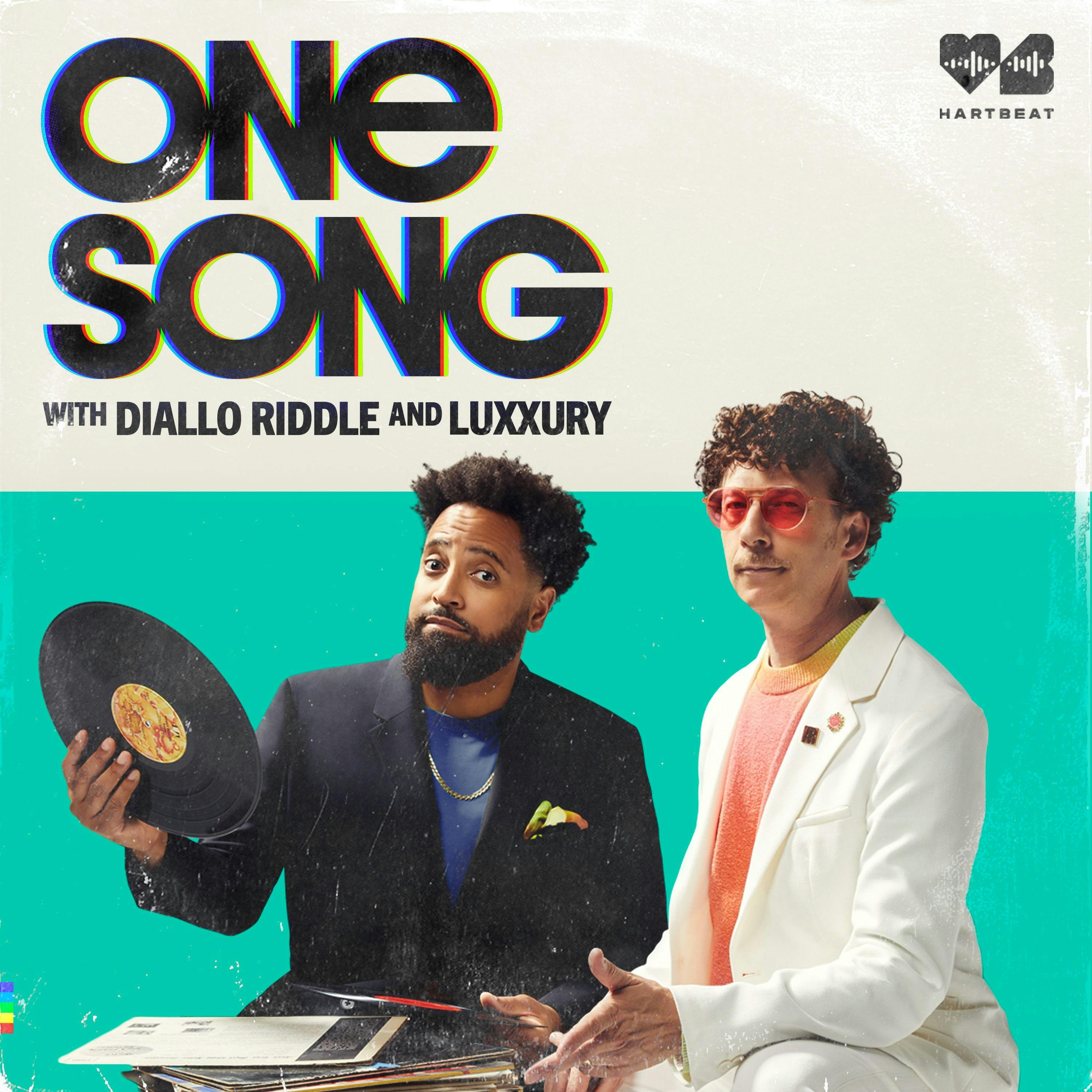
Boyz Ii Men S Motownphilly W Shawn Stockman Part Two
December 18, 2025
Key Takeaways Copied to clipboard!
- The vocal arrangements for Boyz II Men's "Motownphilly" were developed collaboratively, with Nate writing the first verse and Shawn Stockman writing the second, based on the concept and the beat provided by Dallas Austin.
- The iconic dissonant tritone interval used when listing "Boyz II Men, ABC, BBD" in the song was an intentional choice designed to add emphasis and resolve satisfyingly.
- The final, commercially successful version of "Motownphilly" (and the *Cooley High Harmony* album) was actually mastered from the group's original demos because the more polished studio mixes lacked the necessary grit and vibe.
- The segment shifts focus from Boyz II Men to a 'One Genre' deep dive, challenging listeners to explore essential listening within the subgenre of psychedelic hip-hop, defined as the abstract and artsy side of the genre.
- Diallo champions PM Dawn's album *The Bliss Album: Vibrations of Love and Anger and the Ponderance of Life and Existence*, arguing the group was unfairly treated by the mainstream hip-hop community for incorporating singing and abstract themes.
- LUXXURY selects De La Soul's *3 Feet High and Rising* and *Buhloone Mindstate* as essential psychedelic hip-hop, noting that modern reissues often lack original skits and samples due to clearance issues.
Segments
Vocal Arrangement Development
Copied to clipboard!
(00:02:52)
Copied to clipboard!
- Key Takeaway: Nate wrote the first verse of “Motownphilly,” and Shawn Stockman wrote the second verse, with both writers developing their parts after hearing the beat and understanding the concept.
- Summary: The verses for “Motownphilly” were written separately by Nate (first verse) and Shawn Stockman (second verse) after hearing the beat in the studio. The writing process involved one member getting their ideas out, with others offering minor suggestions, but largely respecting the initial concept. The lyrics were formulated by hearing the beat and humming melodies, leading to the inclusion of references to the East Coast family (ABC and BBD).
The ‘ABC/BBD’ Harmony
Copied to clipboard!
(00:10:06)
Copied to clipboard!
- Key Takeaway: The unusual, dissonant harmony on the line “Boyz II Men, ABC, BBD” utilizes a tritone interval, which was intentionally used for emphasis and resolved quickly.
- Summary: The harmony stack on the names of the associated groups features a tritone, a theoretically dissonant interval, which was used deliberately to create tension that resolves immediately. Shawn Stockman and Nate primarily handled this specific two-part harmony. This technique added emphasis to the names before immediately resolving back into the main melodic structure.
Vocal Production Autonomy
Copied to clipboard!
(00:25:30)
Copied to clipboard!
- Key Takeaway: Boyz II Men arranged the majority of their own vocal parts and harmonies, indicating significant production autonomy beyond what Dallas Austin contributed.
- Summary: The group arranged the harmonies and decided who sang which parts, even though Dallas Austin produced the vocals overall. This level of self-production meant that many creative vocal choices were made internally by the group members themselves. This contrasts with the common perception that producers solely dictate vocal arrangements.
Vocal Break and Influences
Copied to clipboard!
(00:27:35)
Copied to clipboard!
- Key Takeaway: The famous a cappella breakdown in “Motownphilly” was inspired by the gospel group Take 6, and the preceding vocal riff was a nod to Aaron Hall.
- Summary: The group aimed for a slick vocal moment during the breakdown, drawing inspiration from groups like Take 6, whom they considered vocal ‘aliens.’ The preceding riff, “Live and direct from Philly town,” was an intentional homage to Aaron Hall. The breakdown itself was one of the last elements recorded, and the final version used was the demo mix.
The ‘Bat’ Artifact Discovery
Copied to clipboard!
(00:28:23)
Copied to clipboard!
- Key Takeaway: The word “Bat” heard in the breakdown of “Motownphilly” is an unmuted artifact from an earlier, scrapped vocal idea where the group sang a line from New Edition’s “Can You Stand the Rain.”
- Summary: The word “Bat” is an accidental inclusion from a demo where the group sang a line from New Edition’s “Can You Stand the Rain” to Bivins. Because the song was mastered from an earlier demo tape, this vocal clip was not fully removed. The intended word was likely “Bad” or related to the scrapped New Edition interpolation.
Millie Vanilli Contrast
Copied to clipboard!
(00:32:01)
Copied to clipboard!
- Key Takeaway: Boyz II Men’s immediate emphasis on live vocal performance, highlighted by the a cappella breakdown, served as a direct, necessary contrast to the public distrust following the Millie Vanilli scandal.
- Summary: When Boyz II Men emerged, the music industry was reeling from the Millie Vanilli lip-syncing scandal, making the group’s commitment to live vocals crucial. Their performance on shows like Donnie Simpson’s emphasized that they were the real vocalists, which resonated strongly with audiences. This contrast helped propel their image as authentic singers.
Slow Jam Success and Pressure
Copied to clipboard!
(00:42:35)
Copied to clipboard!
- Key Takeaway: The massive success of the slow jam “End of the Road” doubled the sales of their debut album, but the group internally avoided trying to replicate that specific song for subsequent projects.
- Summary: The success of “End of the Road” from the Boomerang soundtrack was so significant it forced the repackaging of Cooley High Harmony to include it, pushing the album to Diamond status. Internally, the group felt no pressure to create another ‘End of the Road’ ballad, viewing that success as a unique, unrepeatable moment in time. They focused instead on stretching their creative limbs into new musical directions.
90s Musicianship Decline
Copied to clipboard!
(00:54:27)
Copied to clipboard!
- Key Takeaway: Shawn Stockman asserts that the 1990s featured an unparalleled concentration of highly skilled male vocalists and hitmakers that cannot be matched in the current music landscape.
- Summary: Stockman challenged listeners to name 60 contemporary male artists capable of filling a room with hit records, implying such a concentration of talent no longer exists. He cited contemporaries like D’Angelo, Gerald Lavert, and Tevin Campbell as examples of the era’s deep pool of musicianship. The problem with today’s music, in his view, is this lack of widespread, proven vocal and songwriting prowess.
One Genre Challenge Kickoff
Copied to clipboard!
(00:58:15)
Copied to clipboard!
- Key Takeaway: The ‘One Genre’ segment, sponsored by Discogs, requires hosts to select essential listening within a specific subgenre.
- Summary: The segment initiates the ‘One Genre’ challenge, where hosts must select essential listening within a subgenre suggested by Discogs. The show reiterates its flexible approach to genre, using it as a tool for discussing shared musical sensibilities rather than rigid definitions. The chosen subgenre for this installment is psychedelic hip-hop.
Psychedelic Hip-Hop Definition
Copied to clipboard!
(00:58:39)
Copied to clipboard!
- Key Takeaway: Psychedelic hip-hop is characterized as the abstract and artsy side of a genre typically defined by realism.
- Summary: Psychedelic hip-hop is acknowledged as an uncommon, academic classification that represents the abstract and artsy elements within hip-hop. The expression makes immediate sense to the hosts upon hearing it, functioning more as a conversation starter than a strict label. This style contrasts with the realism often associated with mainstream hip-hop.
Diallo’s PM Dawn Pick
Copied to clipboard!
(00:59:15)
Copied to clipboard!
- Key Takeaway: Diallo selects PM Dawn’s The Bliss Album and asserts the hip-hop community mistreated the group for their unconventional style.
- Summary: Diallo champions PM Dawn’s The Bliss Album: Vibrations of Love and Anger and the Ponderance of Life and Existence, noting the group struggled to get signed in America for wanting to rap and sing. Their international success came after signing overseas, managed by someone connected to Spandau Ballet, leading to the hit ‘Set Adrift on Memory Bliss.’ The group faced backlash, exemplified by KRS-One famously confronting Prince B on stage.
PM Dawn Musical Analysis
Copied to clipboard!
(01:01:02)
Copied to clipboard!
- Key Takeaway: PM Dawn’s sound incorporated synthesizers, breakbeats, and elements reminiscent of British house music, contrasting with typical hard-hitting hip-hop.
- Summary: Songs like ‘Paper Doll’ share qualities with Pet Shop Boys’ ‘West End Girls,’ featuring synthesizers and breakbeats that soften the typical hip-hop rhythm toward a house music feel. Their approach contained elements of Balearic house, similar to early Paul Oakenfold productions or the Happy Mondays. Diallo highlights the R&B slow jam ‘I Die Without You’ from the Boomerang soundtrack as a beautiful, un-rapped track.
PM Dawn Legacy and Timing
Copied to clipboard!
(01:02:37)
Copied to clipboard!
- Key Takeaway: PM Dawn suffered from poor timing, as their eclectic style would be readily accepted today alongside artists like Tyler or Donald Glover.
- Summary: The hosts believe PM Dawn’s material has aged well and that if they emerged today, they would be stylistically accepted alongside artists known for diverse hip-hop like Tyler or Donald Glover. The group’s trajectory was unfortunately cut short by the death of Prince B. Listeners are encouraged to revisit their catalog, including ‘Paper Doll’ and ‘I Die Without You.’
LUXXURY’s De La Soul Pick
Copied to clipboard!
(01:03:24)
Copied to clipboard!
- Key Takeaway: LUXXURY selects De La Soul’s Buhloone Mindstate over 3 Feet High and Rising due to complex sample clearance issues affecting modern pressings.
- Summary: LUXXURY selects De La Soul’s Buhloone Mindstate as his psychedelic hip-hop pick, though he acknowledges the seminal status of 3 Feet High and Rising. Modern vinyl pressings of Buhloone Mindstate often omit or alter tracks because the group could not clear every sample and interpolation from the original version. This results in differences in sound and missing tracks like ‘Long Island Wilding’ on newer copies.
Psychedelic Hip-Hop Characteristics
Copied to clipboard!
(01:06:03)
Copied to clipboard!
- Key Takeaway: The psychedelic element in De La Soul stemmed from eclectic sampling spanning Johnny Cash to game shows, alongside visual motifs like daisies.
- Summary: The psychedelic nature of 3 Feet High and Rising is attributed to its eclectic sampling from diverse sources, including Johnny Cash and game show hosts, especially notable for 1989. De La Soul reportedly disliked being labeled ‘hippies of hip-hop’ and consciously made future albums more street-oriented to avoid pigeonholing, contrasting their treatment with A Tribe Called Quest. Modern psychedelic hip-hop can be seen in artists like Dr. Octagon or Kid Cudi’s spacey themes.
Show Wrap-up and Credits
Copied to clipboard!
(01:08:09)
Copied to clipboard!
- Key Takeaway: Listeners are directed to the One Song Spotify playlist and social media channels for further engagement.
- Summary: The hosts conclude the segment by directing listeners to check out the One Song Spotify playlist containing all discussed tracks. They provide their respective Instagram and TikTok handles for connection with ‘One Song Nation.’ The episode concludes with the full production and executive producer credits.
0:00 / 0:00