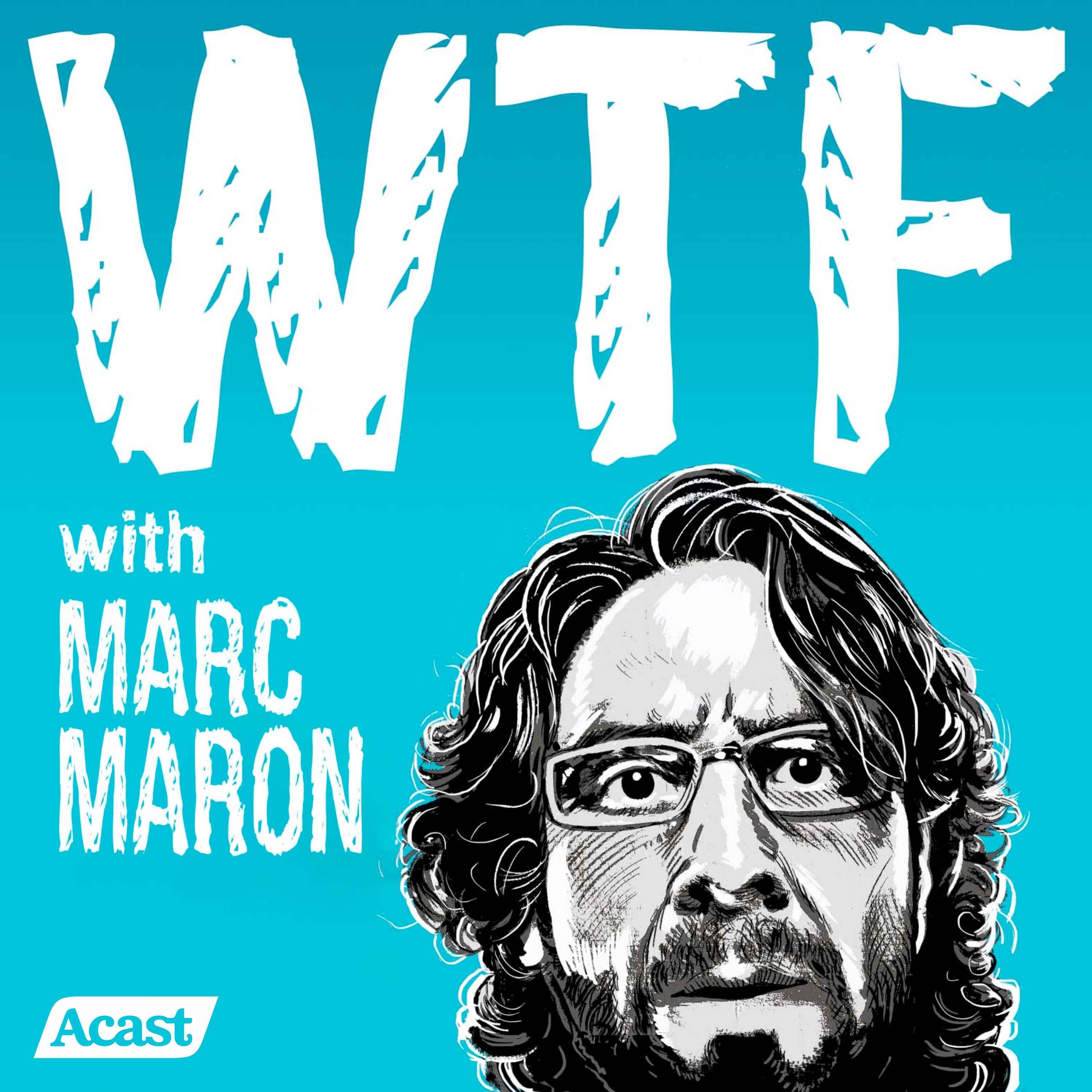
Episode 1682 - Judd Apatow’s Favorite WTF Moments
September 29, 2025
Key Takeaways Copied to clipboard!
- This episode of WTF with Marc Maron Podcast, Episode 1682 - Judd Apatow’s Favorite WTF Moments, is structured around Judd Apatow curating and playing favorite clips, forcing Marc Maron to react to much of his own podcast history for the first time.
- Marc Maron announced that the final episode of the WTF with Marc Maron Podcast will air on Monday, October 13th, partly due to needing to reconfigure his studio as his dog, Charlie, has learned how to open the door.
- The conversation included reflections on the profound impact of the podcast, particularly the difficult but necessary confrontation with Louis C.K., and the value of honest, vulnerable conversations, even when they strain friendships.
- Judd Apatow curated clips highlighting the genius and struggle of figures like Robin Williams, emphasizing the importance of elevating comedic legends for new generations.
- The conversation with Bruce Springsteen is cited as a breakthrough interview where Springsteen became more candid about depression and family, potentially shifting his public persona.
- The longevity and unique connection music artists maintain with their audience through 'greatest hits' contrasts sharply with the constant need for comedians to write entirely new material.
- Judd Apatow shared a deeply personal anecdote about how an interaction with a blind friend at age nine transformed his crippling fear of social interaction by forcing him to look outward, leading to a permanent shift where he finds most things funny except for genuine threats like illness or death.
- The conversation included a reflection on a past interaction with Lorne Michaels, where the speaker realized he was not ready for a job opportunity at that time because he lacked control over his talent and sense of self, concluding that Lorne's decision was ultimately correct.
- Judd Apatow expressed that the existence and quality of the *WTF with Marc Maron Podcast* prevented him from starting his own podcast, viewing it as the pinnacle of the format that could not be topped.
Segments
Episode Format and Host Process
Copied to clipboard!
(00:00:47)
Copied to clipboard!
- Key Takeaway: Marc Maron revealed that he generally does not listen to his own WTF with Marc Maron Podcast episodes, meaning he hears Judd Apatow’s selected clips for the first time.
- Summary: Judd Apatow, an early supporter, proposed this special episode format where he plays his favorite WTF with Marc Maron Podcast moments for Marc to react to. Marc confirmed his practice of not listening to the recorded episodes, making this a unique experience where he hears many clips as audio for the first time. The final episode of the podcast is officially set for Monday, October 13th.
Personal Updates and Announcements
Copied to clipboard!
(00:02:31)
Copied to clipboard!
- Key Takeaway: Marc Maron’s dog, Charlie, has learned how to open doors, which is contributing to the decision to end the podcast and reconfigure the studio space.
- Summary: The final episode date is confirmed as October 13th, partly influenced by the need to address the dog Charlie’s new ability to open doors in the studio. Maron is promoting his upcoming documentary, ‘Are We Good?’, opening October 3rd, and upcoming live shows at Dynasty Typewriter in October. The Kickstarter for the graphic novel ‘WTF is a podcast’ surpassed $200,000, unlocking a special trading card reward.
Guitar Purchase Clarification
Copied to clipboard!
(00:04:36)
Copied to clipboard!
- Key Takeaway: Marc Maron clarified that his recent visit to Norm’s Guitars was to trade in old gear for a single, usable 1973 black Telecaster, not to purchase an expensive collectible.
- Summary: Maron addressed public speculation about a purchase at Norm’s Guitars, stating he brought in old equipment to lighten his load. He acquired a 1973 black Telecaster, which he described as ‘Player Grade’ due to a replaced pickup, emphasizing it was a reasonable trade, not a high-cost collectible purchase.
Appreciation and Listener Impact
Copied to clipboard!
(00:05:51)
Copied to clipboard!
- Key Takeaway: Maron expressed gratitude for the profound, often unexpected, positive impact the show has had on listeners’ lives, citing an email where a story helped locate a lost cat toy.
- Summary: Maron acknowledged an oversight in not mentioning podcaster Jackie Cation earlier. He shared an anecdote about a listener finding their cat’s favorite lost ball under the stove after hearing Maron discuss a similar incident in a special. This reinforced his appreciation for the show’s ability to provide company or help people reframe troubling issues.
Judd Apatow’s Book and Hoarding
Copied to clipboard!
(00:08:34)
Copied to clipboard!
- Key Takeaway: Judd Apatow is promoting his new book, ‘Comedy Nerd: A Lifelong Obsession in Stories and Pictures,’ which functions as a scrapbook of his career, including his collection of autographs.
- Summary: Apatow described his book as containing thousands of pictures and essays detailing his career, including his childhood practice of writing away for autographs from figures like Andy Kaufman. He mentioned that the proceeds from the book sales will benefit fire victims.
Comedians Avoiding Their Work
Copied to clipboard!
(00:14:58)
Copied to clipboard!
- Key Takeaway: Maron and Apatow discussed the phenomenon of successful performers, like Owen Wilson and Adam Driver, avoiding watching their own work to remain uninhibited during performance.
- Summary: Maron noted that he rarely listens to his own podcast, similar to how some actors avoid watching their performances to maintain presence. Apatow suggested that not watching allows performers to be 100% present because the fear of embarrassment is removed.
Reflections on Obama Interview
Copied to clipboard!
(00:17:41)
Copied to clipboard!
- Key Takeaway: Maron and Apatow agreed that former President Obama’s willingness to discuss the difficulty and fearlessness gained through experience made his interview particularly compelling.
- Summary: Maron noted Obama’s vulnerability and lack of political doublespeak during their conversation, contrasting it with other politicians who never admit mistakes. Apatow highlighted that losing fear through experience allows one to be more effective, a benefit of age.
Conflict and Friendship with Louis C.K.
Copied to clipboard!
(00:23:37)
Copied to clipboard!
- Key Takeaway: The confrontation between Maron and Louis C.K. regarding C.K.’s actions was a pivotal moment that demonstrated the podcast medium’s potential for real, human tension and honesty.
- Summary: Apatow suggested the Louis C.K. episodes significantly boosted the show’s profile by addressing real conflict between men honestly. Maron admitted he felt C.K. believed he was betrayed by Maron’s public commentary on the situation, leading to a temporary breakdown in their friendship.
Comedians’ Shorthand and Isolation
Copied to clipboard!
(00:28:31)
Copied to clipboard!
- Key Takeaway: The comedy community shares a precise, often unspoken shorthand for communication, but many comedians remain isolated, leading to friendships that are intense but not day-to-day.
- Summary: Maron noted that while he maintains close friendships outside of comedy, communication with comics is precise, often involving mutual teasing or understanding of shared flaws. He reflected on how his friendship with Louis C.K. operated as a confidant relationship during pivotal times, rather than a constant daily connection.
Critique of Contemporary Comedy Styles
Copied to clipboard!
(00:35:37)
Copied to clipboard!
- Key Takeaway: Maron criticized comedians who focus solely on themselves without audience awareness or those who rely only on narrow stereotypes, contrasting this with comedians whose personal struggles yield universal material.
- Summary: Maron argued that comedy should not be pure therapy and that comedians who turn their backs on the audience are failing at show business. He contrasted this with deeply personal material from figures like Richard Pryor, whose life struggles provided universally resonant stories.
Mike DiStefano’s Final Ride Story
Copied to clipboard!
(00:45:40)
Copied to clipboard!
- Key Takeaway: The late comedian Mike DiStefano shared a powerful story about honoring his dying wife’s final wish to ride on his motorcycle, demonstrating profound humanity amidst suffering.
- Summary: DiStefano recounted how his wife, battling AIDS, needed reassurance that he still needed her, leading him to take her for a ride on his Harley, complete with her IV pole. Maron praised the story for humanizing individuals often dismissed due to difficult pasts like addiction or prostitution.
Robin Williams’ Genius and Legacy
Copied to clipboard!
(00:58:03)
Copied to clipboard!
- Key Takeaway: Robin Williams’ improvisational genius and innate need to find funny lines were evident even when he was struggling.
- Summary: The interview clip showcased Williams’ entire life story, improvisational skill, and sense of struggle. Apatow noted that Williams’ choice to end his life, given his Lewy body dementia, must be separated from struggles related to depression or alcoholism. Apatow’s intention in doing the interview was to elevate Williams’ stature for younger comics who might dismiss him as a ’thief and a hack.'
Bruce Springsteen Interview Dynamics
Copied to clipboard!
(01:03:00)
Copied to clipboard!
- Key Takeaway: Marc Maron’s interview with Bruce Springsteen was intimate because Maron was not a die-hard fan, allowing Springsteen to be loose and candid about depression and fathers.
- Summary: The interview prompted a shift in Springsteen’s public persona, preceding his one-person show, by engaging him candidly about his flaws and family history. Springsteen later advised Taa Wilkenfeld to control interviews by telling the audience what he wanted to convey, rather than answering questions directly. Springsteen explained that performers often feel at home only in front of a crowd because they have tremendous control over the situation.
Performance Control vs. Intimacy
Copied to clipboard!
(01:07:17)
Copied to clipboard!
- Key Takeaway: The necessity of performance drives comedians to face fear, where ambition must outweigh the fear of humiliation.
- Summary: For performers, the equation for going on stage requires ambition and hunger to be greater than the fear of humiliation. Springsteen noted that nights without audience love are bad because that means there is ’no love nowhere’ left in daily life. The stage provides a safe, known space where performers can deliver what is expected and find a moment of peace.
Music vs. Comedy Longevity
Copied to clipboard!
(01:14:41)
Copied to clipboard!
- Key Takeaway: Music possesses a unique magic because songs grow with the audience over decades, unlike comedy, where comedians must constantly write new material.
- Summary: Music allows artists to play ‘greatest hits’ that resonate across different life stages, a luxury comedians do not have, as they must start over every few years. Jokes, however, can last as long as music if they possess inherent life, leading to the observation that older comedians used to keep the same act for their entire careers. The evolution of the podcast itself reflects a comedian sharing experiences, similar to how musicians share their lives with the audience.
Molly Shannon’s Wild Childhood Story
Copied to clipboard!
(01:16:17)
Copied to clipboard!
- Key Takeaway: Molly Shannon and a friend successfully flew from Cleveland to New York City at age 12 due to lax airport security protocols of the era.
- Summary: The 12-year-old girls, dressed in innocent ballet outfits, convinced a stewardess to let them board the plane by claiming they needed to say goodbye to a sister. The adults involved showed irresponsibility, with the stewardess not reporting them and Molly’s father suggesting they try to find a hotel. The ultimate punishment involved paying back the cost of the return flight using babysitting money.
Complicated Parental Support
Copied to clipboard!
(01:20:11)
Copied to clipboard!
- Key Takeaway: Molly Shannon’s father was simultaneously wild and supportive, creating a childhood that felt free but required her to learn ‘regular people’ rules from external sources.
- Summary: Molly Shannon described her father as wild, capable of destructive behavior like knocking over glasses in bars, but also very loving and supportive of her capabilities. This duality meant she had to learn societal norms from professionals because her home life was unconventional. She noted that she had many ’live ones’ (unconventional influences) early on, which she later had to learn to balance.
Podcast Format vs. Traditional TV
Copied to clipboard!
(01:22:33)
Copied to clipboard!
- Key Takeaway: The intimacy created in the unscripted, non-camera-focused podcast environment is unique and superior to traditional television talk show formats.
- Summary: Maron expressed total satisfaction with the podcast path because he and Brendan dictated the terms, avoiding the constraints of cameras and elevated studio atmospheres. He contrasted this intimacy with the work of Terry Gross, noting that the podcast format created something that ‘didn’t really exist in any space with some consistency.’ Maron initially feared the podcast would diminish his stand-up but grew proud of creating a unique space.
Decline of Quality in Content Generation
Copied to clipboard!
(01:24:18)
Copied to clipboard!
- Key Takeaway: The current content landscape prioritizes disposable generation over quality, leading audiences to accept lower production standards exemplified by amateurism.
- Summary: The contraction in mainstream show business and the rise of bubble audiences have lowered the bar for what a show looks like. Audiences are adapting to this lower quality because everything feels disposable and fleeting, overshadowing the effort required for high-quality production. Truly unique creative visions, like those of Letterman or Conan, who sought new ways to execute their work, are rare outside of major network support.
Maria Bamford’s Unique Comedic Voice
Copied to clipboard!
(01:27:12)
Copied to clipboard!
- Key Takeaway: Maria Bamford possesses a fully formed, unique comedic vision that borders on performance art, making her one of the funniest comedians alive.
- Summary: Apatow expressed fear regarding a relationship where he felt he had to control the situation to avoid rage, contrasting this with the need to detach with love. He stated that Maria Bamford is the funniest comedian, comparing her early work to Jonathan Winters. Bamford’s comedy was fully formed from the start, hammering out her unique worldview in clubs despite its performance art quality.
Andrew Dice Clay’s Dual Audience Reception
Copied to clipboard!
(01:33:35)
Copied to clipboard!
- Key Takeaway: Andrew Dice Clay receives polarized feedback: fans thank him for getting them through dark times, while detractors blame him for negative life events.
- Summary: Apatow recounted a fan thanking him for support, immediately followed by Dice Clay stating he only receives thanks for getting people through dark times, while others blame him for job loss or divorce. Apatow witnessed Dice Clay’s evolution from doing impressions like Jerry Lewis in the mid-1980s to his current act. Dice Clay currently maintains a funny, ‘alpha Jewish confidence’ and shares strange content on Instagram.
Albert Brooks’ Profound Life Lesson
Copied to clipboard!
(01:35:33)
Copied to clipboard!
- Key Takeaway: Albert Brooks learned a profound lesson shortly before Jack Benny’s death: even comedy royalty can be unaware of their lasting importance.
- Summary: Albert Brooks recounted that Jack Benny, three days before dying, lamented that he would only be remembered for radio, despite his extensive work in film and television. This taught Brooks the lesson that holding onto one’s legacy is futile, as even the ‘god of comedy’ was uncertain of his impact. Brooks’ interview was considered the best because his humor was effortless and wired into him.
Gary Shandling’s Struggle and Intuition
Copied to clipboard!
(01:39:34)
Copied to clipboard!
- Key Takeaway: Gary Shandling’s boxing practice was intuitive, forcing him to rely on immediate reaction rather than thought, mirroring the necessity of intuition in performance.
- Summary: Shandling took up boxing because he was not naturally combative and needed a situation where thinking was impossible, forcing intuitive counter-moves. Maron noted that Shandling could be guarded but would open up genuinely when comfortable, leading to exciting, non-public conversations. Shandling’s earnest and vigilant struggle to achieve self-acceptance left a significant void after his passing.
The Comedy Store’s Mythic Influence
Copied to clipboard!
(01:44:49)
Copied to clipboard!
- Key Takeaway: The Comedy Store profoundly rewired Marc Maron’s brain by integrating its history and the figures on its walls into a mythic significance during his early, drug-fueled years.
- Summary: Maron felt haunted by the Comedy Store because it represented the history of modern comedy, and he integrated it into his identity while using drugs there. He needed to speak to the figures associated with the club because his relationship with them was initially based on the pictures on the wall. He noted that the club is susceptible to charismatic leaders, referencing the periods dominated by Sam Kennison and Andrew Dice Clay.
Lorne Michaels on Show Business Reality
Copied to clipboard!
(01:51:41)
Copied to clipboard!
- Key Takeaway: Lorne Michaels explained to Maron that show business decisions are not based on an individual’s perceived talent but on external, often arbitrary, factors.
- Summary: Maron recalled his mythic anxiety over not getting hired at SNL, which Lorne Michaels demystified by explaining the reality of the decision-making process. Lorne recalled Maron waiting with Tracy Morgan and asking if the audience laughed at him the night before. Lorne used a zoo analogy to categorize comedians: lions (regal), bears (strongest), and monkeys (funny, occasionally masturbating), placing comedians like Maron in the latter category.
Recalling Early Interactions
Copied to clipboard!
(01:53:44)
Copied to clipboard!
- Key Takeaway: Judd Apatow recalled an early, awkward interaction involving monkeys and a perceived ‘candy test’ where he tried to exude star quality.
- Summary: The segment revisits a specific, early memory involving an interaction where one participant mentioned monkeys jerking off and the other participant’s reaction to candy. The speaker noted trying to project star quality during this encounter, which he felt was unsuccessful. Steve Higgins was present and perceived the situation as not going well early on.
Lorne Michaels Decision Process
Copied to clipboard!
(01:55:04)
Copied to clipboard!
- Key Takeaway: The speaker humanized Lorne Michaels, viewing him as a dedicated TV producer at 30 Rock rather than a vengeful, mythic figure deciding careers.
- Summary: The discussion centered on a past decision-making process involving Lorne Michaels, which the speaker initially perceived as a judgment on his readiness for a job. The speaker concluded that Michaels is fundamentally a guy who works at 30 Rock, making many decisions based on talent assessment, which was a humanizing realization.
Fear, Laughter, and Art Sensitivity
Copied to clipboard!
(01:58:17)
Copied to clipboard!
- Key Takeaway: A childhood experience guiding a blind man led to a permanent shift where the speaker finds most things funny, though extreme laughter can trigger anxiety attacks.
- Summary: The speaker detailed how intense fear of everything was mitigated by a specific event at age nine, leading to a tendency to find everything funny, except for serious issues like death. This laughter can sometimes escalate into hysteria requiring medication to manage panic attacks. Furthermore, the speaker possesses extreme sensitivity to art and literature, often having to avoid it due to overwhelming emotional responses.
Podcast Appreciation and Promotion
Copied to clipboard!
(02:02:06)
Copied to clipboard!
- Key Takeaway: Judd Apatow cited the WTF with Marc Maron Podcast as the reason he never launched his own podcast, viewing it as an unmatched achievement.
- Summary: The speakers exchanged appreciation for the long run of the WTF with Marc Maron Podcast, with Judd Apatow stating the show’s quality was the biggest tribute he could pay. Promotional information was provided for Judd Apatow’s book, Comedy Nerd: A Lifelong Obsession in Stories and Pictures, releasing October 28th. Listeners were directed to supercast.com or wtfpod.com for access to the full ad-free WTF archives via WTF Plus.
0:00 / 0:00