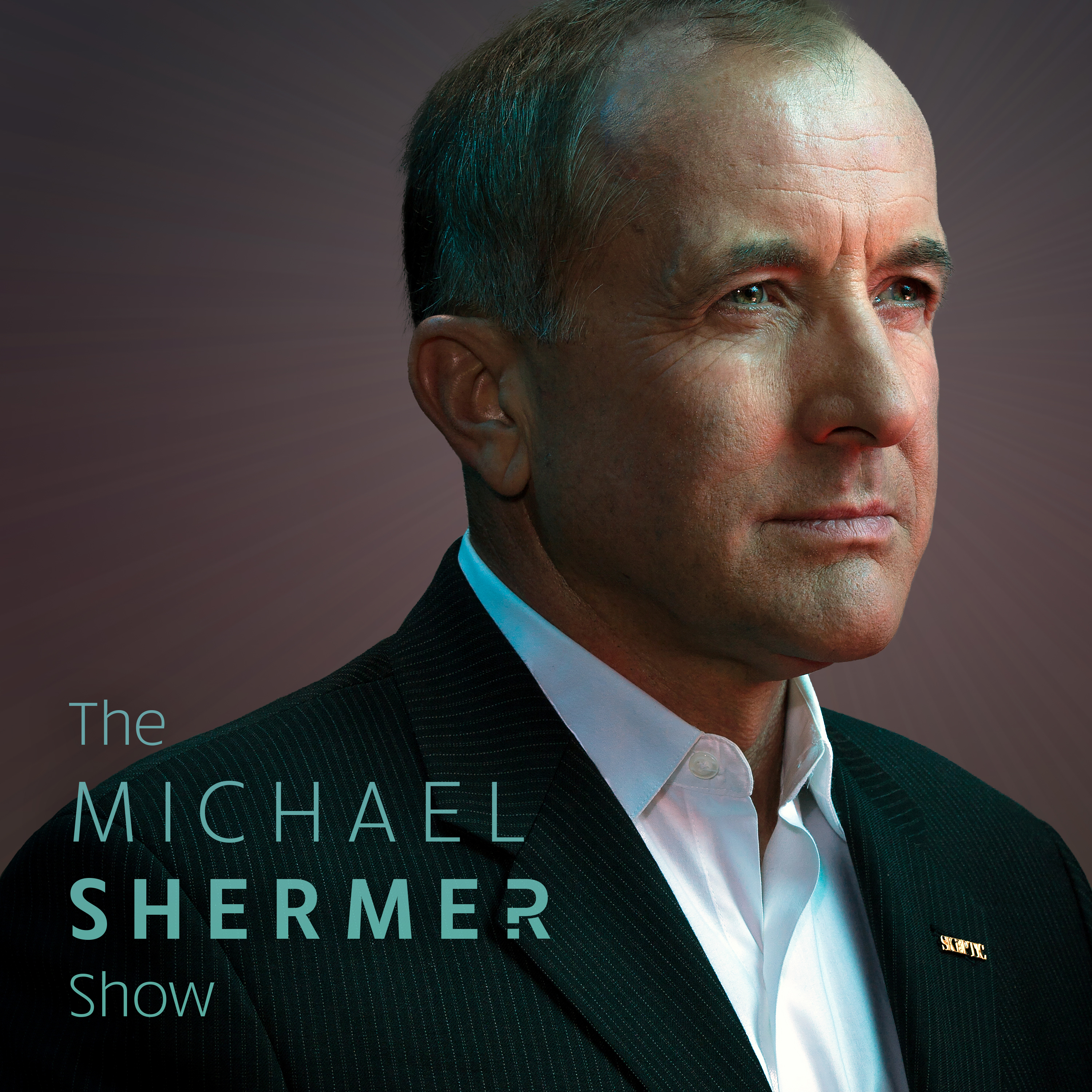
Shermer Says: Debate Skills, 2025 Nobel Peace Prize, Autism, Vaccines, ANTIFA, Bari Weiss & CBS News
October 13, 2025
Key Takeaways Copied to clipboard!
- The new 'Shermer Says' segment on *The Michael Shermer Show* is launched to provide solo commentaries on current events, necessitated by the diminished traction of the written word in the competitive digital media landscape.
- Debates, like those featuring Charlie Kirk, are often about winning through refutation rather than a genuine search for truth, contrasting with the Bayesian approach of being willing to change one's mind based on new evidence.
- The Skeptic Research Center study indicates a concerning level of support for political violence among younger adults, particularly the very liberal, and those with higher educational attainment, highlighting a potential breakdown in applying principles rationally across political divides.
Segments
Introduction of Shermer Says
Copied to clipboard!
(00:00:45)
Copied to clipboard!
- Key Takeaway: The Michael Shermer Show is launching ‘Shermer Says’ as a new weekly solo commentary series to adapt to the changing media landscape.
- Summary: Michael Shermer introduced ‘Shermer Says’ as a new solo commentary addition to the programming, planned for weekly release. This format addresses the reduced traction of the printed word, like Skeptic Magazine or his former Scientific American column, due to increased content competition online. The shift prioritizes video and audio content consumption during daily activities.
Charlie Kirk Death Threats Analysis
Copied to clipboard!
(00:03:23)
Copied to clipboard!
- Key Takeaway: The reaction to the Charlie Kirk death threats mirrors the ‘George Floyd of the right’ phenomenon, potentially leading to a surge in conservative campus organizing via Turning Point USA.
- Summary: Referencing Steven Pinker’s ideas on common knowledge, Shermer suggests the outrage over the threat against Charlie Kirk will galvanize conservative values on campuses. Turning Point USA has received over 100,000 applications for campus chapters, suggesting a coming flood of conservative groups challenging the perceived liberal dominance in academia. This increased visibility may force educators to acknowledge the actual political diversity within student bodies.
Debate Skills vs. Truth Seeking
Copied to clipboard!
(00:08:25)
Copied to clipboard!
- Key Takeaway: Debating, especially in formats like Oxford-style debates, prioritizes winning through refutation over the Bayesian process of seeking truth by updating one’s beliefs.
- Summary: Shermer admires Charlie Kirk’s ability to debate but notes that debaters, like most people, already know the truth they wish to convey, focusing on refuting opponents rather than considering their points. The goal in structured debates is winning by having clever retorts, not by moving closer to objective truth. Shermer advocates for a more Bayesian approach, where one expresses confidence levels and remains willing to change positions based on good arguments.
Trump Nobel Peace Prize Eligibility
Copied to clipboard!
(00:11:47)
Copied to clipboard!
- Key Takeaway: Claims that Donald Trump was snubbed for the Nobel Peace Prize are factually incorrect because the nomination period for the current award cycle had already closed.
- Summary: Trump was not eligible for the current Nobel Peace Prize because nominations must be submitted by January 31st, with submissions for the next year opening mid-October. Shermer compares this to being outraged that a movie released the day before the Oscars ceremony didn’t win. He notes that Trump’s role in orchestrating Israeli-Gaza peace negotiations, potentially involving Jared Kushner, could make him a candidate for a future award.
Tylenol, Autism, and Vaccine Trade-offs
Copied to clipboard!
(00:15:54)
Copied to clipboard!
- Key Takeaway: Complex medical issues like Tylenol use during pregnancy and COVID-19 vaccines involve trade-offs where avoiding one risk (e.g., fever) may involve a smaller, different risk (e.g., Tylenol side effects or vaccine myocarditis).
- Summary: A Skeptic article reviewed evidence suggesting a possible link between Tylenol use in the third trimester and autism, but noted that high maternal fever is also dangerous, illustrating necessary trade-offs. Similarly, while COVID-19 mRNA vaccines carry a risk of myocarditis, the SARS-CoV-2 virus itself causes myocarditis at a higher rate. Thomas Sowell’s principle applies: there are no solutions, only trade-offs where every action has a price.
Antifa Labeling and Political Violence
Copied to clipboard!
(00:18:44)
Copied to clipboard!
- Key Takeaway: Quibbling over whether Antifa is an ‘organization’ or a ‘movement’ misses the core issue: political violence is unacceptable regardless of the side it originates from.
- Summary: Shermer argues against the semantic debate over labeling Antifa, emphasizing that planning aggressive or violent actions against targets like ICE agents is criminal, similar to the January 6th Capitol storming. He urges listeners to avoid ‘my side bias’ and apply principles universally, like a scientist seeking truth rather than a lawyer arguing to win. Political violence is never okay, whether on the left or the right.
Bari Weiss and CBS News Acquisition
Copied to clipboard!
(00:22:18)
Copied to clipboard!
- Key Takeaway: CBS News’s purchase of The Free Press and hiring of Bari Weiss signals an economic necessity for mainstream media to adopt greater political neutrality to remain viable.
- Summary: Shermer views the acquisition as an attempt by legacy media like CBS to navigate the obvious liberal slant in their reporting by embracing neutrality. He notes that many liberals are outraged by Weiss’s hiring because her approach involves assessing arguments neutrally rather than automatically taking sides. This shift toward political centrism is predicted to become the new economic norm for media outlets if The Free Press proves successful.
Skeptic Research Center Political Violence Data
Copied to clipboard!
(00:25:03)
Copied to clipboard!
- Key Takeaway: The latest Skeptic Research Center study found that about one in three younger adults support political violence, with support highest among the very liberal and those with graduate degrees.
- Summary: The study, conducted by former PhD students, revealed that support for political violence was highest among very liberal individuals, with liberal Gen Z women showing more support than older men. Furthermore, those with the highest educational attainment were twice as likely to support political violence compared to those with less formal education. Shermer speculates this trend stems from the liberal mandate for radical change clashing with the belief that non-violent methods have failed.
0:00 / 0:00