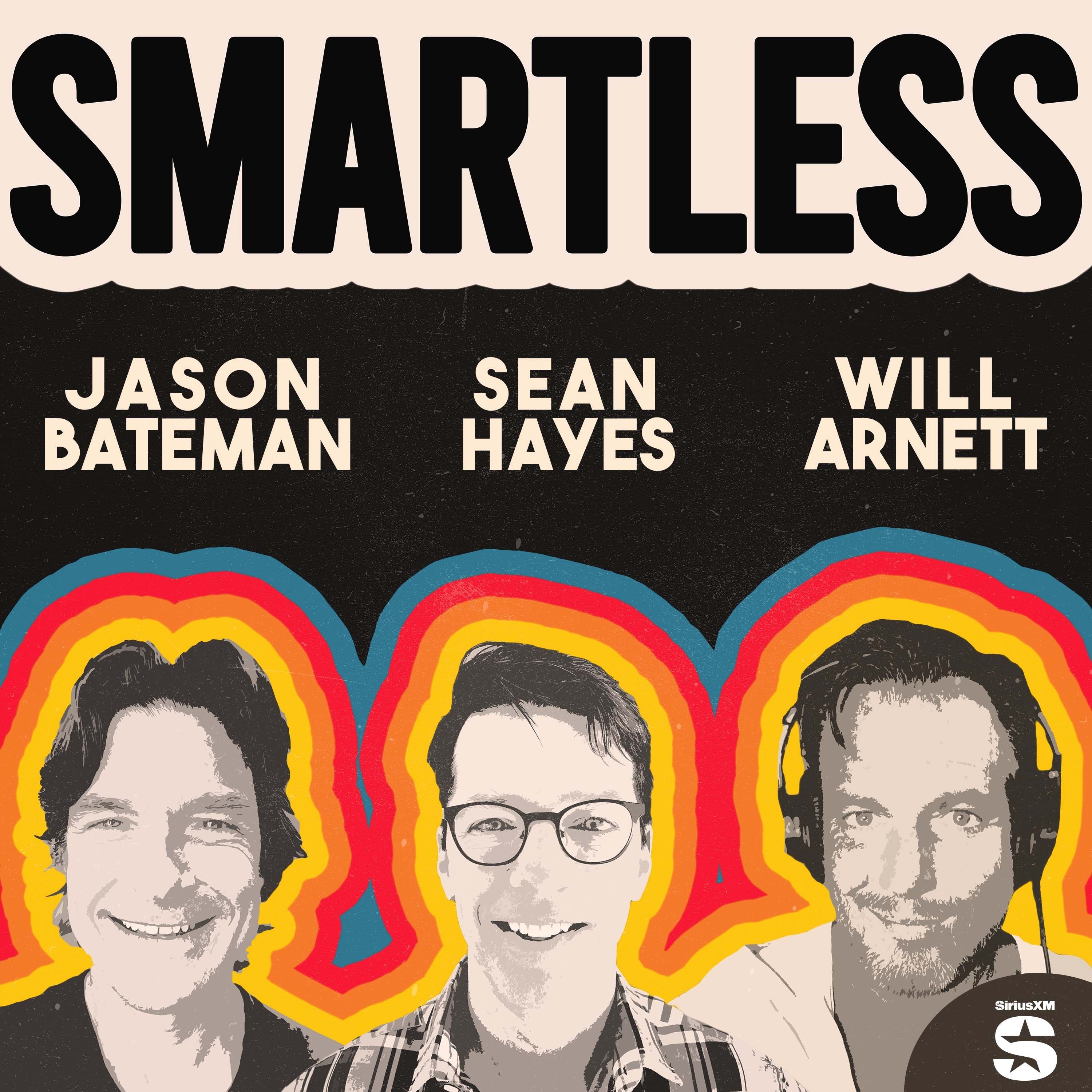
Cillian Murphy
March 16, 2026
Key Takeaways Copied to clipboard!
- The conversation highlights the contrast in directorial styles between Danny Boyle, who favors high energy and constant movement, and Christopher Nolan, who is known for rigorous precision and efficiency, often shooting ahead of schedule.
- The hosts and guest Cillian Murphy explored the shared experience of actors finding it difficult to socialize backstage after performances due to exhaustion and the desire to avoid creating an awkward spectacle.
- Cillian Murphy revealed that his initial career path involved music, a brief attempt at law school, and that his transition to acting was solidified after being profoundly moved by a stage production of *A Clockwork Orange*.
- The success of the show Cillian Murphy discussed (implied to be *Peaky Blinders*) stemmed from its distinct point of view, specificity, and commitment to the creators' vision rather than pandering to a massive audience.
- The use of modern punk rock music, like Nick Cave's 'Red Right Hand,' in the period drama was an initially bold, anachronistic choice that ultimately worked and attracted other major artists to contribute music.
- Actors generally feel a sense of relief and forward momentum when concluding long-running roles, though they cherish the intense, familial bonds formed with cast and crew during production.
Segments
Mispronunciations and Idioms
Copied to clipboard!
(00:02:49)
Copied to clipboard!
- Key Takeaway: The idiom ‘right up my alley’ was corrected from the common mispronunciation ‘ride up my alley,’ and the guest shared a long-held, incorrect interpretation of ‘make ends meet’ as ‘make ends MEAT.’
- Summary: The hosts corrected the common mispronunciation of the idiom ‘right up my alley.’ A guest admitted to mistakenly believing ‘make ends meet’ referred to purchasing cheaper cuts of meat (M-E-A-T). The correct meaning relates to creating a whole circle by having the ends meet, signifying making ends work within a budget.
Origin of ‘Saved by the Bell’
Copied to clipboard!
(00:05:37)
Copied to clipboard!
- Key Takeaway: The phrase ‘Saved by the Bell’ allegedly originated from 19th-century burial practices where a string tied to a buried person’s toe connected to a bell above ground to signal accidental premature burial.
- Summary: A story was shared detailing the supposed origin of the phrase ‘Saved by the Bell’ related to historical fears of being buried alive. Coffins were equipped with strings attached to bells, allowing the supposedly deceased to signal if they awoke. The person monitoring the bells worked the graveyard shift.
Introducing Cillian Murphy
Copied to clipboard!
(00:07:04)
Copied to clipboard!
- Key Takeaway: Cillian Murphy’s extensive career spans theater, film, and television, including roles as a lawyer and rock star aspirant before achieving major acting success.
- Summary: The guest, Cillian Murphy, was introduced as an actor with a career spanning theater, film, and television, who has achieved significant critical acclaim, including an Oscar. His diverse background includes pursuing rock stardom and studying law before committing to acting.
Theater Energy and Wipeouts
Copied to clipboard!
(00:09:39)
Copied to clipboard!
- Key Takeaway: Performing live theater requires actors to retrain their energy to peak at showtime (e.g., 8 p.m.), and the experience can leave performers feeling intensely wired afterward, making sleep difficult.
- Summary: The difficulty of performing live theater involves having to generate maximum energy specifically at performance time, which can be exhausting. Both the guest and a host described feeling intensely ‘wired’ and unable to sleep immediately following a performance. Forgetting lines during a monologue is a significant fear, requiring improvisation to maintain context until the correct line is recalled.
Backstage Etiquette and Fame
Copied to clipboard!
(00:12:39)
Copied to clipboard!
- Key Takeaway: There is an unwritten obligation in the industry for famous individuals to visit actors backstage after a performance, a practice some actors find burdensome, especially when they are exhausted.
- Summary: Actors often feel obligated to host visitors backstage after a show, which can be draining, particularly when they are already tired from performing. Cillian Murphy admitted that as he aged, he found it harder to ‘fake it’ and preferred not to engage socially post-show. The consensus is that if a stage manager facilitates an introduction, it is courteous to comply.
Music Career and Transition
Copied to clipboard!
(00:16:36)
Copied to clipboard!
- Key Takeaway: Cillian Murphy’s initial ambition was music, and his band nearly signed a record deal before his parents intervened due to his young age, leading him toward theater.
- Summary: Many actors, including Cillian Murphy, harbor frustrated musical ambitions, which he considered his first love. His band, which included his brother, was prevented from signing a record deal by his parents when he was young. After this path closed, seeing a promenade production of A Clockwork Orange in Cork City inspired his shift to theater.
Instinct Overthinking in Art
Copied to clipboard!
(00:33:18)
Copied to clipboard!
- Key Takeaway: The key advice for artists is to avoid overthinking or over-intellectualizing creative decisions and instead adhere to instinct, which allows for freedom during performance.
- Summary: The challenge for artists is balancing necessary preparation with the need to remain free and reactive during performance. One method used for preparation involved recording lines in a monotone voice, stripping away inflection and stage direction to avoid predetermining physical choices. This approach allows for more organic reactions based on the environment and co-actors’ actions.
Working with Danny Boyle
Copied to clipboard!
(00:39:38)
Copied to clipboard!
- Key Takeaway: 28 Days Later was a pivotal film that put Cillian Murphy on the map, and working with director Danny Boyle was characterized by infectious, non-stop energy and a clear, coherent vision.
- Summary: Cillian Murphy secured the role in 28 Days Later after numerous auditions, a film he considered a massive gift that significantly boosted his career. Boyle’s directing style is described as having incredible energy, constantly pushing every department, which was infectious for the cast. The film was shot using accessible, consumer-level cameras, making it a unique production.
Nolan’s Directing Style
Copied to clipboard!
(00:43:39)
Copied to clipboard!
- Key Takeaway: Christopher Nolan’s directing style is characterized by extreme precision, shooting quickly (often ahead of schedule), and relying on proximity to the camera rather than video village.
- Summary: Cillian Murphy has worked with Christopher Nolan on six projects, noting that Nolan’s precision shapes his career. Nolan rarely uses more than one camera and watches playback on a small, older monitor, preferring to be near the camera to observe actors directly. This efficiency allowed them to shoot Oppenheimer in only 59 days, as Nolan shoots the script exactly as written.
Set Environment and Leadership
Copied to clipboard!
(00:50:13)
Copied to clipboard!
- Key Takeaway: The atmosphere and energy on a film set percolate down from the leaders, meaning the director and lead actors significantly influence the overall environment.
- Summary: The structure of a film set mirrors a military hierarchy, with energy flowing from the top down. The guest enjoys having fun and ‘crack’ (Irish term for fun/banter) on set, which is set by the leadership. Having a leadership role, like on Peaky Blinders, allows an actor to influence this positive environment.
Itinerant Life and Circus Analogy
Copied to clipboard!
(00:57:56)
Copied to clipboard!
- Key Takeaway: The acting profession is characterized by an itinerant lifestyle, fitting the description of ’the circus of the unemployable.'
- Summary: Actors must follow the work, leading to an itinerant lifestyle. This reality was humorously summarized by a friend who called the profession ’the circus of the unemployable.’ This analogy resonated with the guest, Cillian Murphy.
Character Growth Over Seasons
Copied to clipboard!
(00:58:16)
Copied to clipboard!
- Key Takeaway: Cillian Murphy needed distance after finishing the series to properly reflect on how the character Tommy grew alongside him.
- Summary: The guest admitted he could not immediately answer how playing the same character over multiple seasons affected him personally, as he had just finished the run. He viewed the opportunity to tap into that writing vein for so long as a massive gift. The show initially grew organically through word-of-mouth on the internet.
Show’s Unique Creative Commitment
Copied to clipboard!
(00:59:41)
Copied to clipboard!
- Key Takeaway: The show’s success was attributed to its distinct point of view, avoiding pandering, and committing to specific creative choices in writing, shooting, and music selection.
- Summary: The show maintained its quality because it was made by people who liked the material, rather than trying to retrofit an audience. This specificity and commitment yielded a fervent fan base, contrasting with attempts to create shows designed to hit every demographic, which is deemed a recipe for disaster.
Series Arc and Historical Setting
Copied to clipboard!
(01:00:24)
Copied to clipboard!
- Key Takeaway: The creator always intended the series to span from the end of World War One to the beginning of World War Two, focusing on Britain’s interwar period.
- Summary: The series was never intended to end prematurely, as the writer always had the full arc planned. The setting between the wars in Birmingham was unique, as most media focuses heavily on WWI or WWII, not the period in between. This uniqueness helped attract an audience despite low initial expectations.
Impact of Music Choices
Copied to clipboard!
(01:01:58)
Copied to clipboard!
- Key Takeaway: The juxtaposition of modern punk rock music against the historical setting, starting with Nick Cave’s ‘Red Right Hand,’ was a defining and successful creative element.
- Summary: The music selection, including artists like PJ Harvey, David Bowie, and Radiohead, was an exciting juxtaposition against the World War I setting. Director Otto Bathurst initiated this by using ‘Red Right Hand’ at the beginning, which was incredibly anachronistic but worked. This led to many artists wanting their music featured or creating original tracks for the show.
Saying Goodbye to Long-Term Characters
Copied to clipboard!
(01:03:16)
Copied to clipboard!
- Key Takeaway: Actors hold different sentiments about concluding long roles; some carry the character within them, while others are ready to move on, prioritizing the relationships formed with colleagues.
- Summary: One actor stated he always finds the character inside himself, meaning he carries a piece of them with him. Others expressed pride in the fan reaction but were personally ready to move on, emphasizing forward momentum. The most poignant aspect of ending a project is saying goodbye to the ‘families’ created on set, whose bonds are forged through intense shared experience.
Promoting the New Film
Copied to clipboard!
(01:06:34)
Copied to clipboard!
- Key Takeaway: The film related to the character Cillian Murphy played is titled Peaky Blinders: The Immortal Man, releasing in select theaters on March 6th and on Netflix on March 20th.
- Summary: The film is highly recommended, with the host urging listeners to watch it attentively without distractions like folding laundry. The work done by everyone involved, both in front of and behind the camera, is described as stunning.
Cillian Murphy’s Background Reveal
Copied to clipboard!
(01:07:45)
Copied to clipboard!
- Key Takeaway: Cillian Murphy’s distinctive accent in the series is completely fake; he is actually from Canton, Ohio, where his father helped build the NFL Hall of Fame.
- Summary: The hosts were surprised to learn that Cillian Murphy’s accent is not his own, revealing he is from Canton, Ohio. His father was involved in the construction of the NFL Hall of Fame there. This highlights Murphy’s deep commitment to inhabiting characters, such as maintaining the accent for years.
0:00 / 0:00