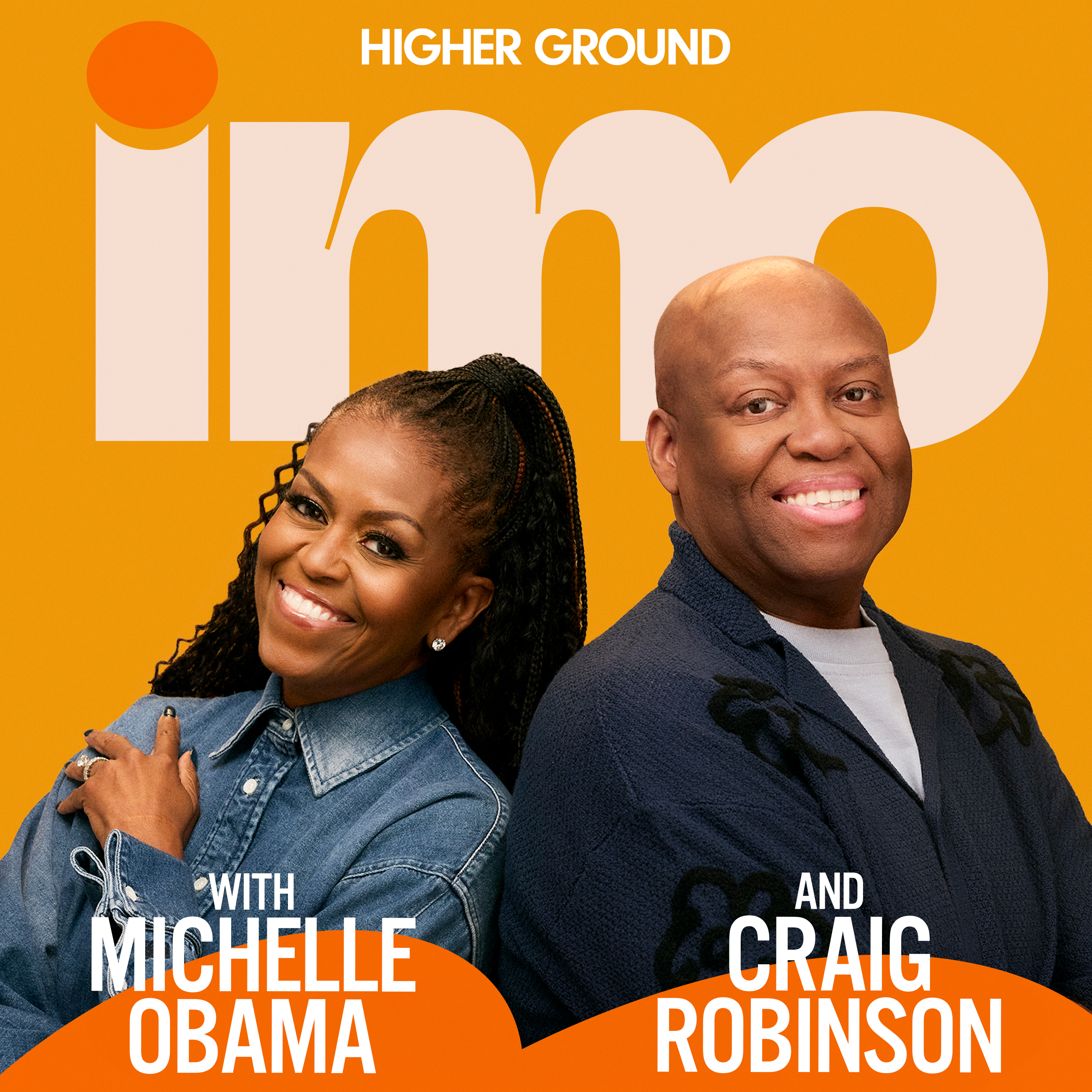
The Making of A Style Icon
November 5, 2025
Key Takeaways Copied to clipboard!
- Michelle Obama intentionally delayed discussing fashion publicly during her time as First Lady to ensure her substance and policy work defined her before her style could, waiting until the world knew her heart and purpose.
- The scrutiny faced by Michelle Obama as the first Black First Lady was intensified by historical stereotypes, making her style and every gesture a language used to navigate treacherous political and cultural territories.
- Early exposure to custom-made clothing, stemming from her family's background with seamstresses and later experiencing diverse socioeconomic brackets in high school, significantly shaped Michelle Obama's innate sense of classic, timeless style.
- Placing Michelle Obama's fashion journey into historical context is essential because style choices symbolize broader societal narratives, language, and the nation's ongoing evolution, rather than just being about dresses and fabrics.
- Lack of exposure and education leads to prejudice, as evidenced by the historical segregation and the principle that it is 'hard to hate up close,' suggesting that interaction breaks down barriers.
- The evolution of Michelle Obama's fashion choices, such as the shift from the tentative teal dress in 2008 to the confident cobalt blue dress in 2016, reflected her growing national acceptance and comfort in her public role.
Segments
Style as National Narrative
Copied to clipboard!
(00:00:00)
Copied to clipboard!
- Key Takeaway: Fashion is viewed as a reflection of the nation’s ongoing evolution, defining who ‘we are’ beyond just economics or job opportunities.
- Summary: Fashion transcends mere aesthetics; it represents the next chapter of national identity, particularly for Black women. True inclusion involves creating spaces where mutual understanding prevents enmity. The book aims to be a reminder of what was and what can be achieved.
Introducing Style Icon Discussion
Copied to clipboard!
(00:00:55)
Copied to clipboard!
- Key Takeaway: The special series ‘The Look’ on IMO centers on Michelle Obama’s style evolution, contextualized by Farah Jasmine Griffin’s foreword.
- Summary: Nina Garcia moderates the discussion between Michelle Obama and Farah Jasmine Griffin, who wrote the foreword for Obama’s latest book. The topic focuses on Mrs. Obama’s style evolution from childhood to the world stage. Griffin’s foreword frames Obama’s legacy within American history and Black culture.
Delaying Fashion Conversation
Copied to clipboard!
(00:03:25)
Copied to clipboard!
- Key Takeaway: Michelle Obama strategically avoided focusing on fashion early in her public life to prevent it from defining her before her substance and core purpose were established.
- Summary: Early in her time as First Lady, Obama feared fashion could define her before she defined herself, risking being seen only as ’the woman in the dress.’ She prioritized leading with substance to control the narrative against external definitions. Now, a decade out and with two books written, she feels the world knows her well enough to discuss fashion.
Scrutiny of First Black First Lady
Copied to clipboard!
(00:05:33)
Copied to clipboard!
- Key Takeaway: Michelle Obama carried the weight of historical stereotypes about Black women, requiring her to navigate public scrutiny through subtle, non-combative means, including fashion.
- Summary: Farah Jasmine Griffin noted that Michelle Obama stepped into the role carrying the baggage of stereotypes associated with Black women in high office. Every gesture, word, and outfit was scrutinized more intensely due to this historical context. Style and clothing became one language she used to navigate these challenging territories.
Childhood Style Origins
Copied to clipboard!
(00:07:43)
Copied to clipboard!
- Key Takeaway: Michelle Obama’s early, self-directed sense of style, involving designing her own prom dresses with her mother, demonstrated an innate understanding of classic, timeless aesthetics.
- Summary: Obama designed her senior prom dress in her head, specifying the material and look, which her mother, a seamstress, then created. This process, common in minority families, gave her liberty in decision-making regarding her presentation. She consciously avoided trendy looks, favoring simple, classic designs even as a teenager.
Respectability vs. Creativity Tension
Copied to clipboard!
(00:16:25)
Copied to clipboard!
- Key Takeaway: Black women often manage the cultural tension between the expectation of ‘respectability’ in presentation and the cultural prioritization of individual creativity and innovation.
- Summary: Black girls are often reared to represent the race well and counter stereotypes, which imposes constraints on dress and presentation. Simultaneously, African American culture highly values individual creativity. This creates a tension regarding where one can be innovative without crossing perceived lines of ‘over the top’ fashion.
Makeup Artist Carl Ray Introduction
Copied to clipboard!
(00:21:44)
Copied to clipboard!
- Key Takeaway: Makeup artist Carl Ray began his career by practicing on his mother at age 14 and later secured his role with Michelle Obama after working for 15 years in D.C. salons.
- Summary: Carl Ray started doing makeup around age 14, initially viewing it as a hobby rather than a career. His professional path began in his 20s in Washington D.C. after an editor asked him to do wedding makeup, leading to him working at the Four Seasons for 15 years. He was hired by the White House team after his name repeatedly surfaced as a top makeup artist.
2004 DNC White Suit Story
Copied to clipboard!
(00:27:31)
Copied to clipboard!
- Key Takeaway: Michelle Obama’s 2004 Democratic National Convention white suit was an instinctive, last-minute choice made without political strategy, yet it resonated with historical imagery of Black women in civil rights.
- Summary: Obama chose the white taffeta suit during a rushed lunch hour because it fit well and popped on stage, not with any strategic intent. Farah Griffin noted that the color white subconsciously connected to historical figures like Elizabeth Eckford of the Little Rock Nine, signaling Obama’s capacity to carry history. This appearance catapulted Barack Obama to national attention, making the country see a future First Lady.
The Oprah Visit and Image Pressure
Copied to clipboard!
(00:33:45)
Copied to clipboard!
- Key Takeaway: The sudden national attention following the 2004 speech led to immediate, high-stakes media demands, like an unannounced Oprah visit, forcing Obama to realize the necessity of a strategic approach to her public image.
- Summary: After Barack Obama gained national recognition, Oprah Winfrey’s team requested an exclusive interview at their home, demanding a ‘day in the life’ look. Obama felt immense pressure to curate her appearance quickly while managing family and work, contrasting sharply with her husband’s minimal preparation time. This event signaled the beginning of understanding the ‘hassle’ of public image management.
Developing a Campaign Strategy
Copied to clipboard!
(00:36:35)
Copied to clipboard!
- Key Takeaway: To manage the demanding campaign schedule, Michelle Obama partnered with Chicago designer Maria Pinto, ensuring impeccable fit for clothes that allowed her to be active and mobile.
- Summary: Recognizing she couldn’t shop off the rack under the campaign schedule, Obama began working with designer Maria Pinto. Pinto’s studio provided custom tailoring, ensuring the fit was always impeccable, which was crucial for her active role campaigning in states like Iowa. This strategic partnership helped her maintain a style of being engaged and mobile.
Media Attacks and Defining Self
Copied to clipboard!
(00:39:49)
Copied to clipboard!
- Key Takeaway: Michelle Obama experienced intense media scrutiny, being labeled ‘angry’ and ‘unpatriotic’ by opponents and media, which forced her to race to define her own narrative strategically.
- Summary: Obama was shocked by media depictions that labeled her negatively, often twisting her jokes or facial expressions into evidence of anger. She realized that if she did not define herself, others would define her through existing stereotypes, such as the ‘angry black woman.’ This realization prompted her to become smarter and more strategic about every move, word, and fashion choice.
The Need for a Style Trifecta
Copied to clipboard!
(00:52:16)
Copied to clipboard!
- Key Takeaway: Public figures require a dedicated team—the ‘Trifecta’ of hair, makeup, and styling—because managing a family, a job, and a public persona alone is impossible.
- Summary: Michelle Obama confirmed that public figures need help, as it is impossible to manage public life, family, and personal presentation simultaneously. Her Trifecta evolved over time, eventually including stylist Meredith Coop, who is also a co-author of the book. The book aims to introduce readers to these essential team members behind the public persona.
Intentionality of White House Fashion
Copied to clipboard!
(00:55:25)
Copied to clipboard!
- Key Takeaway: Fashion choices during the Obama administration were intentional, serving to communicate the President’s vision, Mrs. Obama’s values, and to intentionally open apertures of opportunity for emerging American designers.
- Summary: Every aspect of the White House presentation, from art to fashion, was aligned to send a clear message, including uplifting American design. The selection of Jason Wu for the inaugural gown was an affirmative decision to support new talent. The goal was to ensure the clothes fit so well they disappeared, allowing the focus to remain on the work and the connection with everyday women.
The Grand Canyon Shorts Incident
Copied to clipboard!
(01:00:16)
Copied to clipboard!
- Key Takeaway: Michelle Obama faced disproportionate criticism for wearing practical Bermuda shorts during a Grand Canyon trip, highlighting the unfair scrutiny women face regarding functional attire compared to men.
- Summary: Obama was criticized by a Black female writer for wearing Bermuda shorts on a trip that involved hiking in 100-degree heat, despite the clothing being appropriate for the activity. She noted the infuriating disparity where her husband could simply roll up his sleeves, while she had to spend time planning outfits for subsequent formal events. This incident underscored the lack of benefit of the doubt given to women in the public eye.
Historical Meaning of ‘Lady’
Copied to clipboard!
(01:10:34)
Copied to clipboard!
- Key Takeaway: Historically, the term ’lady’ carried a racial and class meaning in the U.S. that excluded Black women, making the title ‘First Lady’ an oxymoron for some who resisted the concept.
- Summary: The term ’lady’ was historically reserved for a certain class of white woman, meaning Black women were often denied the title, being called ‘Mrs.’ even when married. For some, the idea of a Black First Lady was anathema, requiring them to grow into accepting the concept. Understanding this history is crucial to avoid repeating past societal struggles.
History and Fashion Context
Copied to clipboard!
(01:13:14)
Copied to clipboard!
- Key Takeaway: Fashion history must be contextualized sociologically and historically to prevent the erasure of important struggles from future generations’ knowledge.
- Summary: Failing to teach history, including segregation, slavery, and the suffragist movement, dooms society to repeat past mistakes. Placing the fashion journey into historical context emphasizes that style is symbolic, not merely about fabrics. This narrative is crucial for understanding the next chapter for Black people, Black women, and the nation as a whole.
Ignorance vs. Ill Will
Copied to clipboard!
(01:14:28)
Copied to clipboard!
- Key Takeaway: Negative societal behaviors often stem from being uneducated or disconnected rather than harboring deep, conscious ill will, which is mitigated by personal exposure.
- Summary: The speaker prefers labeling negative behavior as uneducated or disconnected rather than racist, suggesting that subconscious negative reactions arise from a lack of knowledge. The experience as First Lady confirmed that it is ‘hard to hate up close,’ as direct interaction fostered love and support from diverse factions globally. Historical segregation prevented interaction, making it easy for wedges to be driven between groups by painting the ‘other’ as scary.
Diversity and Inclusion Importance
Copied to clipboard!
(01:15:46)
Copied to clipboard!
- Key Takeaway: Diversity and inclusion are fundamental to creating spaces where people know one another, preventing them from becoming enemies, which is a spirit that contrasts with current national trends.
- Summary: Diversity and inclusion are more than economic catchwords; they are essential for establishing mutual understanding. The positive feeling of pride experienced during the White House years is contrasted with a current, sadder national experience. The book aims to be a reminder of what was possible and what the nation can aspire to be again.
2016 DNC Dress Symbolism
Copied to clipboard!
(01:16:32)
Copied to clipboard!
- Key Takeaway: Michelle Obama’s 2016 DNC cobalt blue dress symbolized complete national acceptance and confidence, contrasting with the tentative introduction required by her 2008 appearance.
- Summary: By 2016, Michelle Obama no longer needed to introduce herself, showing confidence and comfort that the nation had proudly claimed her. The 2008 DNC dress was a slight teal, labeled ‘Kailua blue,’ which referenced Barack Obama’s Hawaiian upbringing and was incorporated into the presidential China. The shift to a powerful cobalt blue in 2016 signaled a full-circle moment of established identity.
Post-White House Style Evolution
Copied to clipboard!
(01:18:49)
Copied to clipboard!
- Key Takeaway: Fashion risks, such as returning to college-era braids, were reserved for the post-White House period, while the second term allowed for more freedom than the initial First Lady role.
- Summary: The second term allowed for more experimentation with hair and style while still operating under the constraints of being the First Lady. The ‘Becoming’ book tour intentionally utilized pantsuits to move away from the dresses worn during the T-Link speeches, aiming for a look that felt special, glitzy, and invigorating for arena crowds. True fashion risk-taking, like wearing braids, was reserved for after leaving the White House.
Embracing Diversity Post-Tenure
Copied to clipboard!
(01:20:04)
Copied to clipboard!
- Key Takeaway: Listeners must never let historical setbacks cause them to second-guess the truth that diversity is a source of strength, which begins with self-love and valuing oneself.
- Summary: The final speech quote emphasized that glorious diversity of faith, color, and creed is what defines the nation, not a threat to it. The message is to embrace self-love first, as external embrace follows internal validation. Inclusion is the right spirit, shared equally by a God who believes in the equality of everyone, as humanity shares the planet and rises or falls together.
0:00 / 0:00