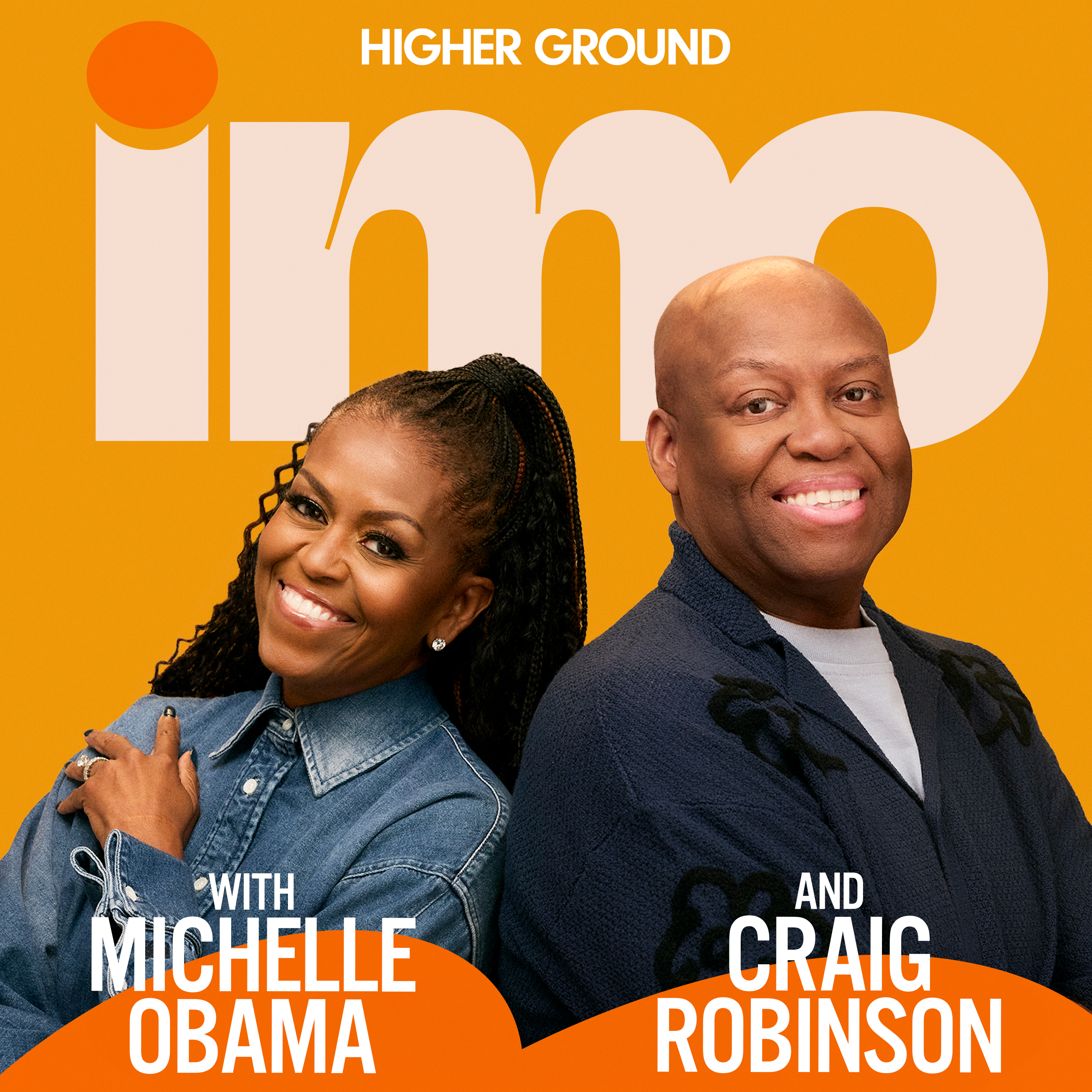
IMO Presents: The Look Live with Tracee Ellis Ross
November 14, 2025
Key Takeaways Copied to clipboard!
- Michelle Obama intentionally avoided discussing fashion during her time as First Lady to prevent her appearance from distracting from her substantive work, realizing early on that women in the public eye are often reduced to their looks.
- The book *The Look* serves as an homage to the dedicated team behind Michelle Obama's memorable looks and provides a platform for them to share their own stories, highlighting fashion as a language that facilitates purpose.
- For Michelle Obama, fashion choices during her White House years were strategic tools used to control her narrative, support her husband's work, and expand opportunities for diverse designers, while post-White House, her style reflects a newfound freedom, particularly in embracing natural hair like braids.
Segments
Controlling Personal Narrative
Copied to clipboard!
(00:00:00)
Copied to clipboard!
- Key Takeaway: Michelle Obama asserted control over her story and narrative as First Lady, which extended to her sartorial choices.
- Summary: As First Lady, Michelle Obama recognized the necessity of being smarter than external forces attempting to define her, applying this strategy to everything she did, including her wardrobe. She felt she had to proactively manage her image to ensure her work was the focus, not just her appearance. This necessity to control the narrative was a core principle she carried into her role.
Fashion as Language and Purpose
Copied to clipboard!
(00:01:34)
Copied to clipboard!
- Key Takeaway: Fashion is viewed as a language that can facilitate purpose, express freedom, and connect history to the future.
- Summary: Tracee Ellis Ross framed fashion as a language capable of communicating how one wishes to be regarded, serving as a tool for creativity and joy. For a Black woman in the role of First Lady, fashion was explicitly not frivolous but a means to convey purpose. Clothing choices can signal connection to history and message the future.
Rationale for Publishing The Look
Copied to clipboard!
(00:03:16)
Copied to clipboard!
- Key Takeaway: Michelle Obama waited nearly a decade post-White House to discuss fashion publicly, feeling the world now knew her substance.
- Summary: Michelle Obama purposefully avoided discussing fashion during her eight years as First Lady, fearing it would distract from her work and noting how the press often reduced her substantive speeches to commentary on her attire. Now, almost ten years out and having established her identity through previous books, she feels it is the right time to discuss the ‘how’ of fashion. The book is intended to be an homage to the team that supported her looks and to share their stories in their own voices.
Fashion as Work and Supporting Designers
Copied to clipboard!
(00:07:27)
Copied to clipboard!
- Key Takeaway: Dressing for public life is demanding work that requires a dedicated team and provided a platform for diverse, emerging designers.
- Summary: The process of presenting oneself publicly requires tireless, unacknowledged work from a dedicated team, which Michelle Obama now seeks to honor in her book. She intentionally used her platform to support designers who were not traditionally in the spotlight, expanding opportunities for diverse, talented individuals. This aligns with the administration’s broader goal of expanding opportunities for those who might otherwise be overlooked.
Childhood Influences on Style
Copied to clipboard!
(00:10:41)
Copied to clipboard!
- Key Takeaway: Early life experiences, including economic scarcity and observing neighborhood style, shaped Michelle Obama’s understanding of fashion’s agency.
- Summary: Growing up working class, Michelle Obama initially coveted store-bought fashion but was inspired by the style and grace observed in her South Side of Chicago neighborhood and on Soul Train. Her mother’s frugality taught her what she did not want to emulate in her own presentation. Exposure to wealthier peers at her magnet school introduced her to preppy trends, teaching her early lessons about how presentation can affect how one is perceived in white, professional spaces.
Fashion as Protection Against Racism
Copied to clipboard!
(00:17:02)
Copied to clipboard!
- Key Takeaway: Michelle Obama realized in her early teens that clothing and speech could serve as armor against the microaggressions of racism.
- Summary: Exposure to downtown business districts while commuting to her magnet school taught her that presenting herself correctly was necessary to avoid being wrongly accused of theft by white onlookers. This early understanding reinforced that how one shows up can sometimes be a form of self-preservation. This awareness informed her approach to controlling her narrative, especially when facing attacks during the first presidential campaign.
Navigating White House Expectations
Copied to clipboard!
(00:24:08)
Copied to clipboard!
- Key Takeaway: Michelle Obama countered low public expectations by focusing intensely on her work and relying on the internal validation provided by her parents’ love.
- Summary: Having been practiced in overcoming low expectations as a Black woman, her strategy was to focus on executing the task at hand flawlessly and letting her work speak for itself. She was angered, rather than hurt, by hypocrisy and ignorance, particularly the campaign narrative that painted her as an ‘angry shrew.’ She knew she had to quickly define herself to avoid being defined by others, a necessity she carried into her role as First Lady.
The First Lady Archetype and Partnership
Copied to clipboard!
(00:31:46)
Copied to clipboard!
- Key Takeaway: Michelle Obama rejected the traditional First Lady archetype of wifedom, prioritizing partnership and ensuring her role did not block the work of the Commander-in-Chief.
- Summary: She disagreed with the notion that the First Lady is an archetype for wifedom and femininity, calling it a throwback definition irrelevant to modern women. Her marriage to Barack Obama was defined by partnership and equality, recognizing his brilliance while ensuring her actions supported their shared goals. Her motto was ’let us not block the work,’ which meant balancing high-end fashion with accessible brands to avoid appearing disconnected while humanizing the President.
Stylist Meredith Coop’s Rigorous Process
Copied to clipboard!
(00:38:11)
Copied to clipboard!
- Key Takeaway: The selection of First Lady attire involved exhaustive research into event context, politics, and history to ensure the fashion narrative aligned with purpose.
- Summary: Stylist Meredith Coop’s process involved studying event details, current politics, historical significance, and audience to inform the fashion narrative. This meticulous research was exponentially amplified for international events requiring State Department collaboration. The team even had designers like Diane von Furstenberg modify classic designs, such as sewing up wrap dresses, to ensure practicality for Michelle Obama’s active schedule.
Freedom in Post-White House Hair Choices
Copied to clipboard!
(00:46:32)
Copied to clipboard!
- Key Takeaway: Michelle Obama maintained straight hair as First Lady to avoid controversy, but embraced braids post-White House as a practical expression of freedom.
- Summary: During her White House years, she kept her hair straight to avoid it becoming a talking point, using bangs to give her edges a break from constant heat styling. She views the decision to wear braids afterward as a continuation of freedom, allowing her to swim, exercise, and focus on her work without the exhaustion and expense of daily straightening. Wearing braids when unveiling her official portrait was a deliberate statement affirming that natural hair is appropriate for any role.
Practicality and Tailoring in Style
Copied to clipboard!
(00:57:38)
Copied to clipboard!
- Key Takeaway: Michelle Obama prioritizes stable footwear for public speaking and emphasizes that tailoring affordable clothing is the biggest styling hack for a polished look.
- Summary: She prefers lower heels or flats for speeches to remain grounded and avoid focusing on stability, practicing in flats before wearing the actual event shoes. For the DNC speech, she chose a ‘bad’ (clever/edgy) suit and a long power braid to minimize hair distraction. A key piece of advice is that tailoring even affordable clothes from stores like Target or J. Crew makes them look clean and sleek, fitting diverse body types correctly.
0:00 / 0:00