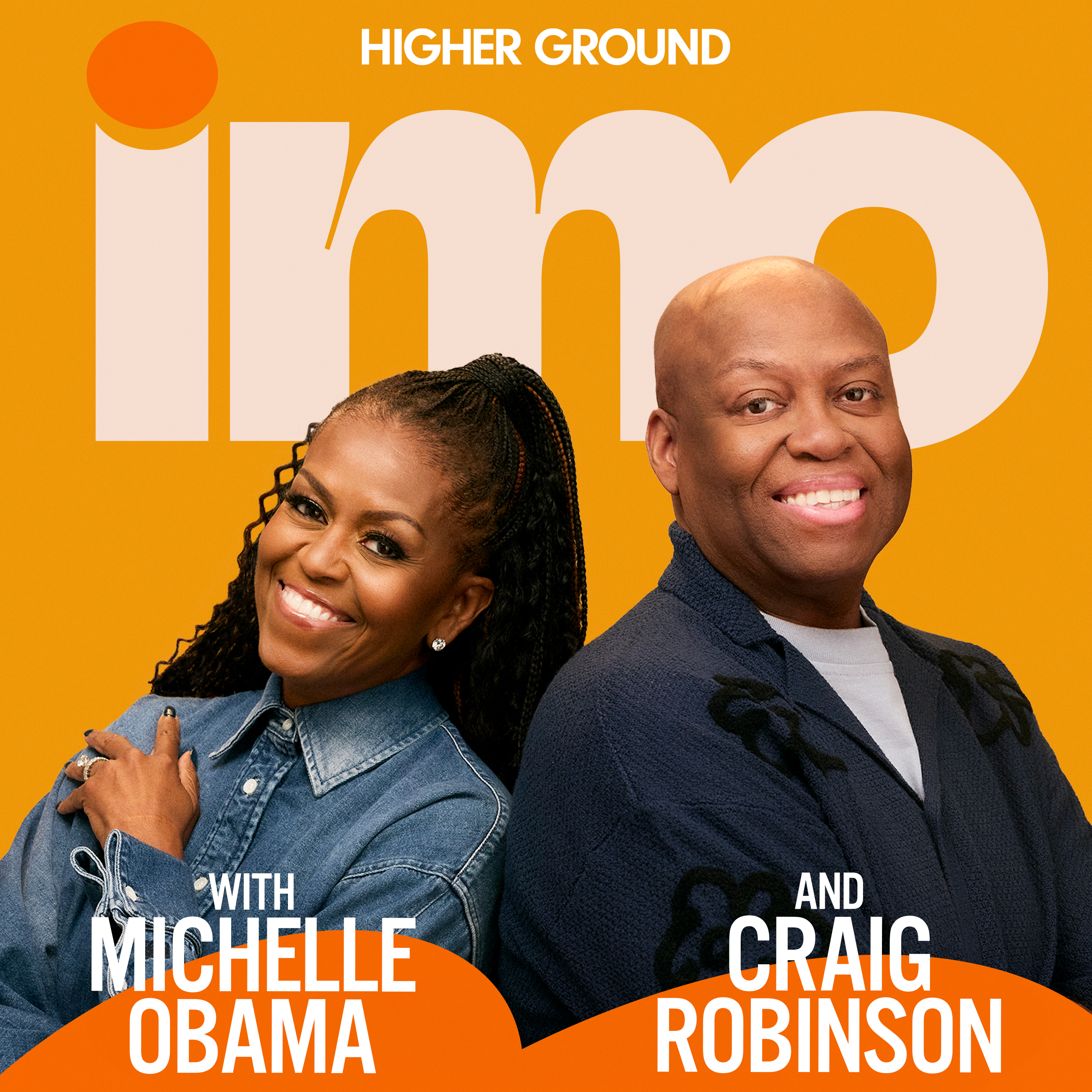
Behind The Looks with Meredith Koop
November 26, 2025
Key Takeaways Copied to clipboard!
- The primary goal during Michelle Obama's time as First Lady was ensuring flawless presentation to avoid negative narratives, exemplified by the intense focus on preventing any wardrobe malfunctions like a broken zipper.
- Meredith Koop's career as a stylist began unexpectedly after studying psychology, landing her first major role through persistence at the high-end Ikrom Boutique in Chicago.
- Styling the First Lady during the White House years involved intense logistical management and political/cultural sensitivity, requiring the stylist to be prepared for spontaneous activities like impromptu push-ups, unlike typical celebrity styling focused solely on glamour.
- Michelle Obama's styling philosophy shifted post-White House to prioritize personal expression, exemplified by the bold Balenciaga thigh-high boots worn during the "Becoming" book tour, moving away from the constraints of representing the First Lady role.
- The styling choices during Michelle Obama's time as First Lady were highly intentional, focusing on promoting inclusion by championing American and immigrant designers, such as Jason Wu, to turn dressing her into an 'American opportunity.'
- A core principle of Michelle Obama's fashion approach, facilitated by Meredith Koop, was ensuring comfort and authenticity so she could focus on her duties and connect genuinely with people, rather than being constrained by impractical clothing choices.
Segments
Stylist’s White House Pressure
Copied to clipboard!
(00:00:00)
Copied to clipboard!
- Key Takeaway: The paramount goal for Michelle Obama’s styling team was preventing any public mishap, such as a zipper breaking or a fall, to protect the image of the first Black First Lady.
- Summary: The stylist meticulously checked every detail, including zippers, to ensure no wardrobe failure occurred during the eight years in office. This meticulous preparation was driven by the high stakes associated with the public perception of the first Black First Lady. The ultimate success metric was leaving office without any public falling incident.
Introduction and Book Promotion
Copied to clipboard!
(00:00:40)
Copied to clipboard!
- Key Takeaway: The episode is part of a special series called ‘The Look,’ coinciding with the release of Michelle Obama’s book of the same name.
- Summary: Host Elaine Welteroth introduces Michelle Obama and stylist Meredith Koop for a behind-the-scenes look at their style journey. The conversation is framed around Michelle Obama’s new book, ‘The Look.’ The episode promises to cover style evolution from the White House era to the present day.
Meredith Koop’s Backstory
Copied to clipboard!
(00:02:09)
Copied to clipboard!
- Key Takeaway: Meredith Koop initially pursued psychology and entered the fashion industry by taking a temporary sales associate job at the legendary high-end Chicago boutique, Ikrom Boutique, out of necessity.
- Summary: Koop did not initially plan a career in fashion, having studied psychology because she was interested in people. She secured her first fashion job by boldly asking for a temporary position at Ikrom Boutique after being initially rejected due to lack of experience. Working there provided her with foundational education in designers, fabric, and tailoring, skills typically learned as a styling assistant.
Transition to White House Role
Copied to clipboard!
(00:10:05)
Copied to clipboard!
- Key Takeaway: Meredith Koop was recruited for the White House role after her boss at Ikrom Boutique was asked to send someone to D.C. to act as a go-between for Michelle Obama.
- Summary: The call from Ikrom was sudden, asking Koop to go to D.C. to work with Michelle Obama, prompting her to say ‘yes’ to the immediate next step without knowing the full scope of the job. Michelle Obama’s initial assessment of Koop was based on her potential: if she was smart, funny, and worked hard, she would succeed. The role quickly evolved from part-time assistance to a full-time styling position due to the increasing demands of the First Lady’s schedule.
Hairstylist Yanae Damtu’s Journey
Copied to clipboard!
(00:16:31)
Copied to clipboard!
- Key Takeaway: Hairstylist Yanae Damtu started working with the Obama family at age 21, balancing her cosmetology career with completing a business degree required by her supportive parents.
- Summary: Yanae Damtu began styling the Obama girls when they were 10 and 7, acting as a big sister mentor focused on long-term hair health over fleeting trends. Despite dropping out initially to move to D.C., her parents insisted she return to college, leading her to earn a business degree which now aids her in running her salon with 23 employees. She felt immense pressure as a young Black professional to uphold the legacy of the family she served.
First Impressions and Authenticity
Copied to clipboard!
(00:28:20)
Copied to clipboard!
- Key Takeaway: Michelle Obama’s first impression of Meredith Koop was of a beautiful, steady, and honest person who connected genuinely with the entire family, not just the First Lady.
- Summary: Koop’s honesty about her inexperience and her open heart were key factors in building trust, which Michelle Obama valued more than professional polish. Koop was instrumental in styling not only Mrs. Obama but also her daughters and mother, demonstrating a deep familial connection. Koop’s foundation in recovery and therapy informed the grounded approach she brought to the high-pressure role.
Defining the First Lady Stylist Role
Copied to clipboard!
(00:37:08)
Copied to clipboard!
- Key Takeaway: Styling the First Lady was defined by practicality and ensuring clothing did not distract from the political message, contrasting sharply with celebrity styling focused on ‘what’s hot.’
- Summary: The role required constant readiness for unglamorous activities, such as dropping to the floor for push-ups or gardening, meaning clothes needed to be functional and approachable. Logistically, the stylist was a one-woman operation, procuring and managing all wardrobe needs because the First Lady’s staff was not budgeted for a full fashion crew like the President’s military valets. The goal was to look good but never to look like she was ‘above’ the people she was meeting.
Controlling the Narrative Through Fashion
Copied to clipboard!
(00:57:49)
Copied to clipboard!
- Key Takeaway: Michelle Obama insisted on wearing her own clothes for fashion shoots to maintain complete control over her image and narrative, especially given the political scrutiny she faced as a Black public figure.
- Summary: The storytelling in fashion was about inclusion, exemplified by choosing Jason Wu for the inaugural gowns to create an American opportunity for designers. The First Lady felt a responsibility to wear American designers, including those with immigrant backgrounds, as part of the broader American story. This control was necessary because she knew she would be judged on her authentic self, not a curated version created by others.
Post-White House Style Liberation
Copied to clipboard!
(01:13:09)
Copied to clipboard!
- Key Takeaway: The post-White House style evolution began with an intentional shift away from dresses toward strong suits and updated pants to signify freedom.
- Summary: Michelle Obama felt liberated to express herself more boldly after leaving the White House, marking a clear break from the formal dresses associated with the First Lady role. The initial focus for the ‘Becoming’ book tour was on strong suits and updated pants, signaling a new era. This shift allowed the creative team to play more freely after eight years of working within defined boundaries.
Balenciaga Thigh-High Boot Moment
Copied to clipboard!
(01:16:57)
Copied to clipboard!
- Key Takeaway: The iconic yellow Balenciaga thigh-high boots required a complex, multi-fitting process and were nearly discarded due to the difficulty of putting them on backstage.
- Summary: The Balenciaga look was originally a skirt and top, not a dress, and required fitting five times to ensure perfection. Meredith Koop initially doubted the boots would be worn due to their difficult application process, which involved sliding the fabric down like pantyhose backstage. The look was chosen for the New York show because the setting felt appropriate for such a high-fashion statement.
Inauguration Day Practicality and Safety
Copied to clipboard!
(01:23:00)
Copied to clipboard!
- Key Takeaway: For the Biden inauguration, Stuart Weitzman boots were selected specifically because Michelle Obama stated she needed to be able to run, highlighting preparedness for potential security issues.
- Summary: The entire look for the second inauguration, designed by Sergio Hudson, was prepped for uncertainty, including multiple layers for temperature changes. Michelle Obama explicitly requested footwear that would allow her to run, leading to the selection of the Stuart Weitzman boots over pumps. The stylist and team were prepared for issues, as the stylist was not permitted to attend the event in person due to security concerns.
Fashion as Authenticity and Support
Copied to clipboard!
(01:26:38)
Copied to clipboard!
- Key Takeaway: The ultimate goal of fashion choices was to ensure comfort and authenticity, allowing Michelle Obama to focus on connecting with people rather than worrying about her attire.
- Summary: Fashion should empower women to feel good in their clothes, ensuring the clothes do not wear the person. Being comfortable allowed Michelle Obama to focus on her responsibilities, such as hugging people or comforting them, without distraction. Meredith Koop’s brilliance was in finding clothes that allowed Michelle Obama’s true self to shine through, which was essential for the job over eight years.
0:00 / 0:00